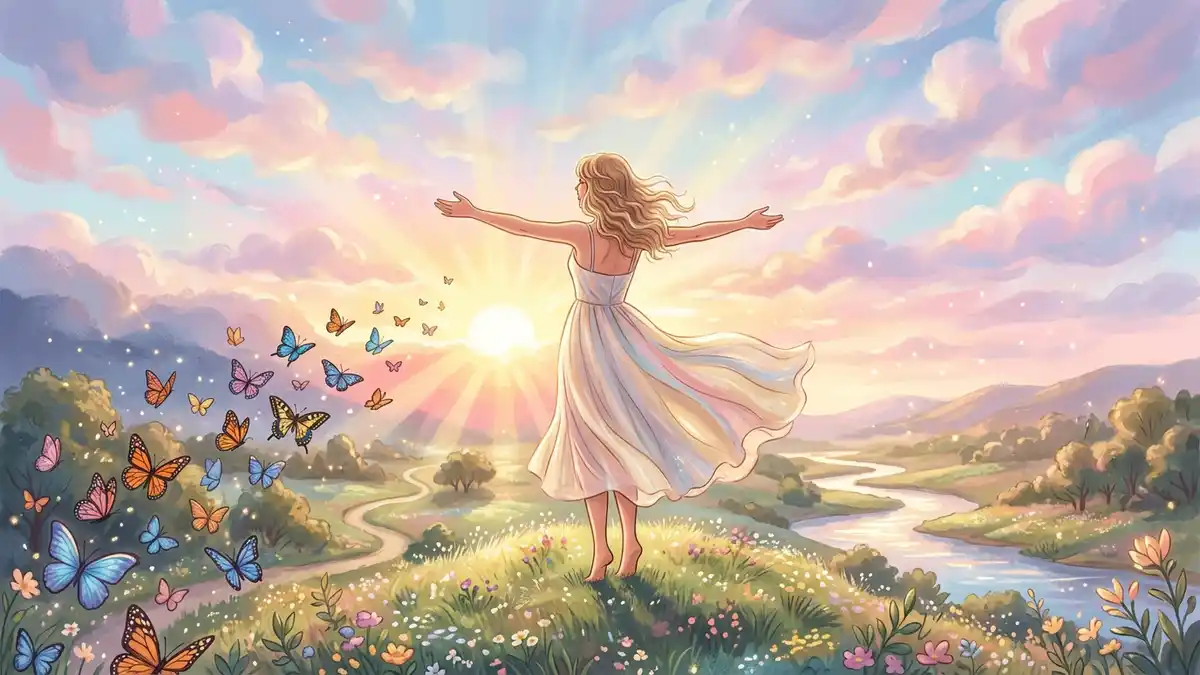

Daylight Taylor Swift Lyrics close Lover (2019) with warmth, clarity, and one of the most quoted spoken outros in Taylor Swift’s modern catalog. Produced by Jack Antonoff, the track functions as both love song and thesis statement—an answer to the burning reds of earlier eras and an embrace of love reimagined as something golden, chosen, and sustainable. For readers exploring Taylor Swift’s seventh studio album—released August 23, 2019, as her first fully owned LP at release—“Daylight” is the emotional horizon the entire record walks toward.
Table of Contents
About Daylight
Album closers carry special weight: they can feel like a curtain call, a confession, or a promise about what comes next. “Daylight” chooses all three in a gentle cascade. Antonoff’s production is often described as warm—open textures, gradual build, emotional instrumentation that supports Swift’s vocal performance without stealing focus. The result is reflective synth-pop that feels like morning light through curtains: not harsh, but insistent enough to wake you. After seventeen tracks of romance, humor, vulnerability, and public-facing statements, the listener gets a moment of synthesis.
The song’s lyric sheet returns to a familiar Swift strategy: color as emotional shorthand. Across her work, red has carried intense associations—passion, pain, urgency—most famously tied to her album Red and its expanded cultural mythology. “Daylight” explicitly reframes the metaphorical palette, arguing that love does not have to remain a destructive brightness. That narrative move is not merely poetic; it is autobiographical in the broad sense Swift favors—less a courtroom fact pattern than an artist’s statement about growth, healing, and the language she wants to live inside now.
Fans frequently connect “Daylight” to the journey from Reputation’s defenses to Lover’s openness. Where the prior era leaned on darker sonic moods and imagery of survival in the spotlight, Lover often chooses softness without pretending the world is safe. “Daylight” acknowledges damage—“I wounded the good”—yet refuses to end there. It is a rare kind of pop closing track: hopeful without being naive, spiritual without being preachy, personal without locking the listener out.
The spoken outro lands as a manifesto in plain language. After verses and choruses that operate through metaphor, Swift steps closer to the microphone and speaks directly, summarizing what the album has been trying to say about love’s definitions. That shift in delivery matters: it breaks the fourth wall of “song” and enters “conversation,” which is exactly how many fans experience Swift’s work—as intimate correspondence scaled to stadium size. In live settings and fan edits online, the outro is often excerpted as a standalone affirmation, proof of how strongly it resonates as a closing statement.
Daylight Lyrics
[Verse 1]
My love was as cruel as the cities I lived in
Everyone looked worse in the light
There are so many lines that I’ve crossed unforgiven
I’ll tell you the truth, but never goodbye
[Chorus]
I don’t wanna look at anything else now that I saw you
I don’t wanna think of anything else now that I thought of you
I’ve been sleeping so long in a 20-year dark night
And now I see daylight, I only see daylight
[Verse 2]
Luck of the draw only draws the unlucky
And so I became the butt of the joke
I wounded the good and I trusted the wicked
Clearing the air, I breathed in the smoke
[Pre-Chorus]
Maybe you ran with the wolves and refused to settle down
Maybe I’ve stormed out of every single room in this town
Threw out our cloaks and our daggers because it’s morning now
It’s brighter now, now
[Chorus]
I don’t wanna look at anything else now that I saw you (I can never look away)
I don’t wanna think of anything else now that I thought of you (Things will never be the same)
I’ve been sleeping so long in a 20-year dark night (Now I’m wide awake)
And now I see daylight (Daylight), I only see daylight (Daylight)
I only see daylight, daylight, daylight, daylight
I only see daylight, daylight, daylight, daylight
[Bridge]
And I can still see it all (In my mind)
All of you, all of me (Intertwined)
I once believed love would be (Black and white)
But it’s golden (Golden)
And I can still see it all (In my head)
Back and forth from New York (Sneaking in your bed)
I once believed love would be (Burning red)
But it’s golden
Like daylight, like daylight
Like daylight, daylight
[Chorus]
I don’t wanna look at anything else now that I saw you (I can never look away)
I don’t wanna think of anything else now that I thought of you (Things will never be the same)
I’ve been sleeping so long in a 20-year dark night (Now I’m wide awake)
And now I see daylight (I see daylight), I only see daylight (Ah)
I only see daylight, daylight, daylight, daylight
I only see daylight, daylight, daylight, daylight (Ah)
I only see daylight, daylight, daylight, daylight
I only see daylight, daylight, daylight, daylight
[Outro (Spoken)]
Like daylight
It’s golden like daylight
You gotta step into the daylight and let it go
Just let it go, let it go
I wanna be defined by the things that I love
Not the things I hate
Not the things that I’m afraid of, I’m afraid of
Not the things that haunt me in the middle of the night
I, I just think that
You are what you love
Meaning and Analysis
“Daylight” is an argument about reinvention—not reinvention as a marketing costume change, but reinvention as emotional literacy. The lyrics suggest someone who has lived through extremes and now wants a love that does not require constant crisis as fuel. In Swift’s discography, that theme connects backward to songs that treated love like weather systems and forward to later eras where maturity continues to complicate her writing. Here, the metaphorical work is accessible: daylight is visibility, safety, and the end of stumbling in the dark; it is also the courage to be seen as you are, not only as you perform.
Jack Antonoff’s collaboration with Swift is often discussed in terms of sonic continuity across albums, but “Daylight” highlights his skill at emotional pacing—knowing when to hold back, when to bloom, when to let the vocal take center stage. The track’s uplift feels earned because the arrangement does not rush it; the listener is guided through doubt toward relief. That craft pairs neatly with the lyric’s self-interrogation: growth, in this song, is not a sudden miracle but a practiced orientation—choosing different metaphors, different defaults, different ways to describe the same human need for connection.
As the finale of Swift’s first owned album at release, “Daylight” also reads as a symbolic closing bell: an artist defining love on her own terms at a time when public narrative threatened to define her first. Whether a listener comes for catharsis, for lyric analysis, or for the outro’s quotable clarity, the song delivers a coherent ending—rare in an era of infinite playlists—by insisting that an album can still feel like a completed thought. In daylight, you can finally see the whole room; Swift uses that image to suggest you can finally see love without letting it blind you.
FAQs
Who produced Daylight on Lover?
Jack Antonoff produced Daylight, contributing to its warm, reflective synth-pop atmosphere and emotional pacing as the album closer.
Why is Daylight important to the Lover album?
As the closing track, it summarizes the album’s themes about redefining love and moving from pain toward hope, including a spoken outro that many fans treat as Swift’s thesis statement.
How does Daylight connect to Taylor Swift’s earlier albums?
The lyrics reference moving beyond a “burning red” conception of love, which listeners often connect to Swift’s prior metaphors and emotional imagery—especially associations with the Red era.
When was Lover released?
Lover, Taylor Swift’s seventh studio album, was released on August 23, 2019—her first album she fully owned at release—with Daylight as its final original track.