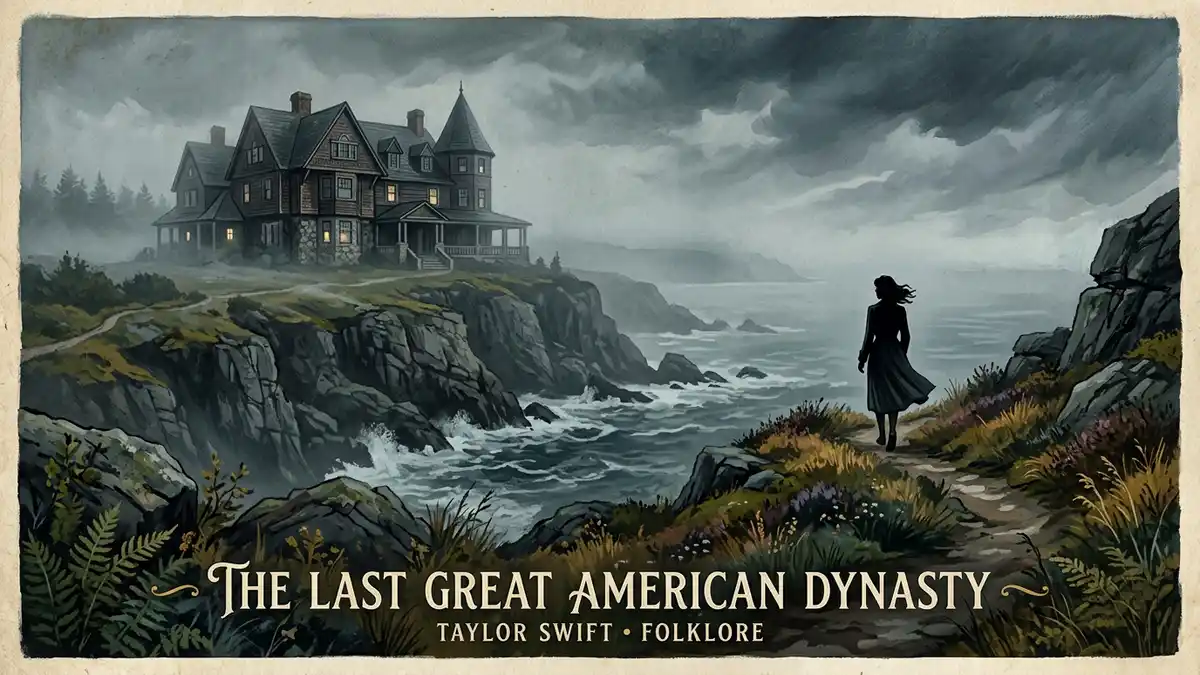

History, wealth, scandal, and reinvention collide in one of Folklore’s most fascinating narrative tracks. If you have been searching for the last great american dynasty Taylor Swift lyrics, you have found the definitive guide to this captivating song. Taylor Swift surprised the world on July 24, 2020, with her eighth studio album Folklore, and “the last great american dynasty” quickly became a fan favorite for its vivid storytelling and clever autobiographical parallels. The track tells the true story of Rebekah Harkness, a socialite who once owned the very Rhode Island mansion that Swift later purchased, drawing unmistakable connections between two women separated by decades but united by public scrutiny and an unapologetic refusal to conform.
About the last great american dynasty
“the last great american dynasty” is rooted in a true story that Taylor Swift discovered after purchasing Holiday House, a sprawling oceanfront estate in Watch Hill, Rhode Island. The mansion’s most colorful previous owner was Rebekah West Harkness, a composer, philanthropist, and socialite who married Standard Oil heir William Hale Harkness in 1947. After William’s death in 1954, Rebekah inherited a vast fortune and became infamous in Rhode Island society for her extravagant parties, eccentric behavior, and refusal to conform to the expectations of her wealthy neighbors. She reportedly dyed a neighbor’s cat green, filled her swimming pool with champagne, and scandalized the quiet coastal community at every opportunity.
Swift and Aaron Dessner co-wrote the track, with Dessner providing a brisk, almost jaunty instrumental foundation built on strummed acoustic guitar, bright piano, and propulsive percussion. The production has a storybook quality to it, perfectly complementing the narrative songwriting style that Swift employs throughout the track. Unlike many Folklore songs that lean into atmospheric moodiness, “the last great american dynasty” has an energetic, forward-moving quality that keeps pace with its rapid-fire storytelling. Swift crams an enormous amount of biographical detail into the song’s relatively brief runtime, painting Rebekah Harkness as a larger-than-life figure whose reputation preceded her everywhere she went.
The song’s most striking creative choice comes in its final act, when Swift shifts the narrative perspective from Rebekah to herself. After spending the majority of the track chronicling Harkness’s life and the town’s disapproval of her, Swift reveals that she is now the house’s owner and has inherited not only the property but also the reputation of being the woman who “ruined” the neighborhood. This twist transforms the song from a historical biography into a meditation on how women who dare to live boldly and take up space are punished across generations, regardless of era or circumstance.
the last great american dynasty Lyrics
Rebekah rode up on the afternoon train, it was sunny
Her saltbox house on the coast took her mind off St. Louis
Bill was the heir to the Standard Oil name and money
And the town said: How did a middle-class divorcée do it?
The wedding was charming, if a little gauche
There’s only so far new money goes
They picked out a home and called it Holiday House
Their parties were tasteful, if a little loud
The doctor had told him to settle down
It must have been her fault his heart gave out
And they said
There goes the last great American dynasty
Who knows, if she never showed up, what could’ve been
There goes the maddest woman this town has ever seen
She had a marvelous time ruining everything
Rebekah gave up on the Rhode Island set forever
Flew in all her bitch pack friends from the city
Filled the pool with champagne and swam with the big names
And blew through the money on the boys and the ballet
And losing on card game bets with Dalí
And they said
There goes the last great American dynasty
Who knows, if she never showed up, what could’ve been
There goes the most shameless woman this town has ever seen
She had a marvelous time ruining everything
They say she was seen on occasion
Pacing the rocks, staring out at the midnight sea
And in a feud with her neighbor
She stole his dog and dyed it key lime green
Fifty years is a long time
Holiday House sat quietly on that beach
Free of women with madness, their men and bad habits
And then it was bought by me
Who knows, if I never showed up, what could’ve been
There goes the loudest woman this town has ever seen
I had a marvelous time ruining everything
I had a marvelous time ruining everything
A marvelous time ruining everything
A marvelous time
I had a marvelous time
Meaning and Analysis of the last great american dynasty
The genius of “the last great american dynasty” lies in how Swift uses Rebekah Harkness’s story as a mirror for her own experiences with public perception. Throughout her career, Swift has been the subject of intense media scrutiny, public shaming, and the kind of moral policing that society often reserves specifically for successful women. By placing her own story alongside Harkness’s, Swift argues that this pattern of punishing outspoken, unconventional women is not unique to modern celebrity culture but is a deeply ingrained American tradition. The old-money neighbors who whispered about Rebekah’s parties are not so different from the tabloid commentators who dissect Swift’s every move, and the song makes this connection without being heavy-handed about it.
The historical details Swift weaves into the lyrics are remarkably accurate. Rebekah Harkness did indeed fund a ballet company, the Harkness Ballet, which became both her passion project and her most public extravagance. She did clash with her Watch Hill neighbors, and her lifestyle was considered outrageous by the conservative social circles of mid-century Rhode Island. Swift researched Harkness extensively before and after purchasing Holiday House, and the song reflects a genuine fascination with the woman whose ghost, in a sense, still inhabits the property. The specificity of the storytelling — the champagne pool, the key parties, the neighbor feuds — gives the song a novelistic richness that rewards repeated listening.
On a broader thematic level, “the last great american dynasty” questions the very concept of legacy and ownership. Who truly owns a place — the person whose name is on the deed, or the community that judges how they use it? Both Rebekah and Swift bought Holiday House with their own money, lived in it on their own terms, and were criticized for doing so. The song suggests that the real “dynasty” is not about bloodlines or wealth but about the succession of bold women who refuse to shrink themselves to make others comfortable. By claiming Rebekah’s story as her own and drawing explicit parallels, Swift creates a lineage of defiance that transcends time, arguing that the best response to those who want to control your narrative is to live louder.
FAQs about the last great american dynasty
Who is Rebekah Harkness?
Rebekah West Harkness (1915–1982) was an American composer, philanthropist, and socialite who married Standard Oil heir William Hale Harkness. After his death, she inherited a vast fortune and became known for her extravagant lifestyle, founding the Harkness Ballet, and owning Holiday House in Watch Hill, Rhode Island — the same estate Taylor Swift later purchased.
Is the last great american dynasty a true story?
Yes, the song is based on the true story of Rebekah Harkness and her life at Holiday House in Watch Hill, Rhode Island. The details about her parties, conflicts with neighbors, and reputation are historically accurate. Swift draws parallels between Harkness’s experiences and her own as the estate’s current owner.
What is Holiday House?
Holiday House is a sprawling oceanfront estate located in Watch Hill, Rhode Island. It was originally owned by Rebekah Harkness, who was famous for her lavish parties there. Taylor Swift purchased the property and has made it one of her primary residences, famously hosting her annual Fourth of July celebrations at the mansion.
Who wrote the last great american dynasty?
“the last great american dynasty” was written by Taylor Swift and Aaron Dessner. Dessner also produced the track as part of their remote collaboration during the creation of Folklore in the spring and summer of 2020.