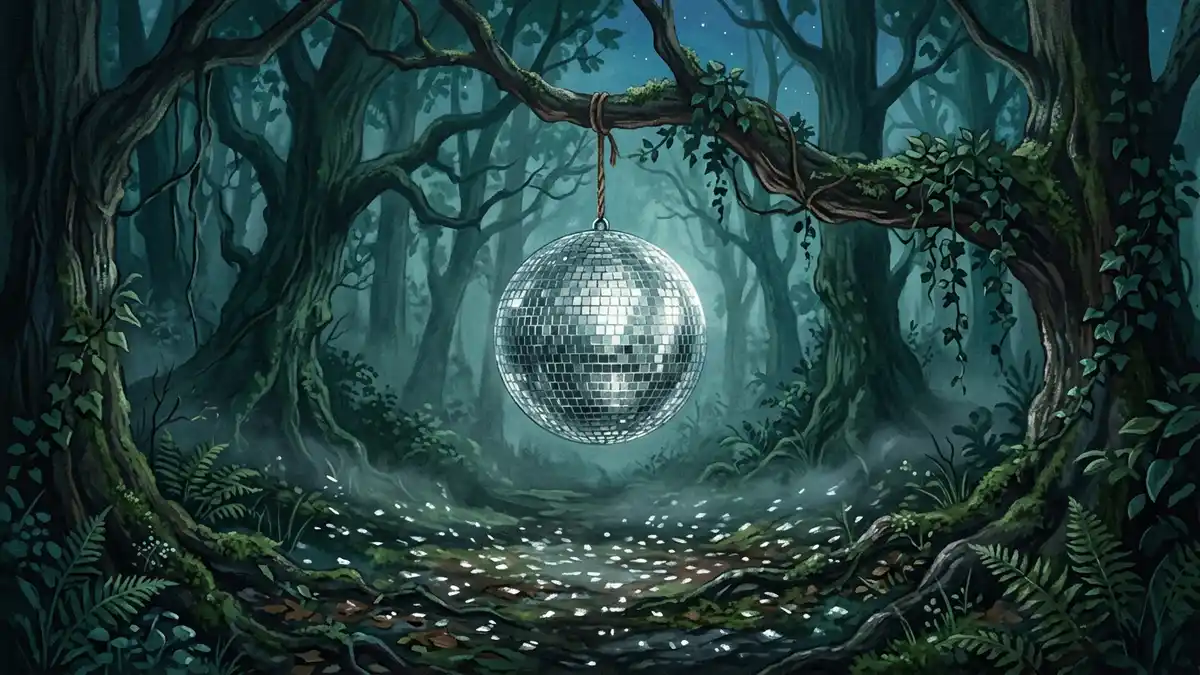

Shimmering, vulnerable, and endlessly reflective — few songs capture the anxiety of performance and the desire to be loved quite like “mirrorball.” If you are searching for mirrorball Taylor Swift lyrics, this guide offers a complete look at one of the most emotionally layered tracks on Folklore. Released as part of Taylor Swift‘s surprise eighth studio album on July 24, 2020, “mirrorball” uses the image of a disco ball as an extended metaphor for the experience of constantly shapeshifting to meet the expectations of others. Produced by Jack Antonoff, the track features a shimmering, atmospheric soundscape that perfectly mirrors its thematic content, creating one of the most sonically distinctive songs on an album full of standout moments.
About mirrorball
“mirrorball” is the sixth track on Folklore and one of only a handful of songs on the album produced by Jack Antonoff rather than Aaron Dessner. Antonoff, who has been one of Swift’s most important creative collaborators since the 1989 era, brings a distinctly different sonic texture to the tracks he produced on Folklore. While Dessner’s productions lean toward organic instrumentation and raw, folk-inflected atmospherics, Antonoff’s contributions shimmer with a more polished, dream-pop sensibility. “mirrorball” is the clearest example of this contrast, with its glistening reverb, layered harmonies, and a rhythmic pulse that evokes the slow rotation of a disco ball casting light across a dark room.
The song was written by Swift and Antonoff during the same burst of quarantine creativity that produced the rest of Folklore. Swift has spoken about how the album emerged from her desire to tell stories and explore emotions through characters and metaphors rather than straightforward autobiography, and “mirrorball” is one of the album’s most effective uses of extended metaphor. The entire song is built around the image of a mirrorball — a sparkling, beautiful object that exists solely to reflect the light around it, having no light of its own. For Swift, this image resonated deeply with her experience as a public figure who has spent her career adapting to audience expectations, reinventing her image with each album cycle, and trying to be everything to everyone.
The production choices on “mirrorball” are remarkably precise in how they support the song’s central metaphor. Antonoff employs a technique where Swift’s vocals are layered and processed to create a slightly fractured, prismatic quality, as if her voice itself is being refracted into multiple reflections. The instrumentation shimmers and pulses without ever fully resolving into a traditional verse-chorus structure, mirroring the mirrorball’s constant motion and the narrator’s inability to ever truly be still. Subtle guitar textures, ambient synth pads, and a gentle but persistent bass line create a soundscape that feels both intimate and vast, like standing alone in a ballroom after everyone else has gone home.
mirrorball Lyrics
I want you to know
I’m a mirrorball
I’ll show you every version of yourself tonight
I’ll get you out on the floor
Shimmering beautiful
And when I break, it’s in a million pieces
Hush, when no one is around, my dear
You’ll find me on my tallest tiptoes
Spinning in my highest heels, love
Shining just for you
Hush, I know they said the end is near
But I’m still on my tallest tiptoes
Spinning in my highest heels, love
Shining just for you
I want you to know
I’m a mirrorball
I can change everything about me to fit in
You are not like the regulars
The masquerade revelers
Drunk as they watch my shattered edges glisten
Hush, when no one is around, my dear
You’ll find me on my tallest tiptoes
Spinning in my highest heels, love
Shining just for you
Hush, I know they said the end is near
But I’m still on my tallest tiptoes
Spinning in my highest heels, love
Shining just for you
And they called off the circus, burned the disco down
When they sent home the horses and the rodeo clowns
I’m still on that tightrope
I’m still trying everything to get you laughing at me
I’m still a believer, but I don’t know why
I’ve never been a natural, all I do is try, try, try
I’m still on that trapeze
I’m still trying everything to keep you looking at me
Because I’m a mirrorball
I’m a mirrorball
And I’ll show you every version of yourself tonight
Meaning and Analysis of mirrorball
The mirrorball as a metaphor works on multiple levels throughout the song. On the most immediate level, it represents a people-pleaser — someone who reflects what others want to see rather than showing their own true self. The narrator confesses to changing shape, adapting their personality, and performing different versions of themselves depending on who is watching. This is a deeply vulnerable admission, not because people-pleasing is unusual, but because the narrator is fully aware of what they are doing and feels powerless to stop. The mirrorball does not choose to reflect; it is designed that way, and there is a quiet tragedy in recognizing that the very quality that makes you valuable to others — your ability to adapt, to shine, to entertain — is also what prevents you from ever being truly known.
For Swift specifically, “mirrorball” reads as a remarkably candid reflection on the nature of celebrity and the emotional cost of being a public performer. Throughout her career, Swift has navigated an extraordinary number of public reinventions — from country ingenue to pop superstar to reputation-era provocateur to Folklore’s introspective storyteller. Each transformation was met with both acclaim and criticism, and “mirrorball” suggests that behind all of those carefully managed evolutions was a person desperately trying to keep everyone’s attention by becoming whatever they seemed to want. The COVID-19 pandemic, which cancelled tours and removed the live performance element of Swift’s career, provided a unique moment to examine this pattern. Without a stage, without an audience, what is a mirrorball? The song grapples with this existential question without offering easy answers.
The emotional complexity of “mirrorball” lies in its refusal to frame people-pleasing as either entirely negative or secretly noble. The narrator does not apologize for being a mirrorball, nor do they celebrate it. Instead, they present it as a fundamental aspect of their identity — something that causes pain but also brings genuine joy. There is real pleasure in making others happy, in being the center of attention, in casting light into dark corners. But there is also loneliness in knowing that the admiration you receive is directed at a reflection rather than the real you. This tension between the performative self and the authentic self runs throughout Folklore, but it reaches its most explicit expression in “mirrorball,” making it one of the album’s most philosophically rich and emotionally resonant tracks. Antonoff’s production, with its constant shimmer and gentle unease, captures this duality perfectly.
FAQs about mirrorball
Who wrote mirrorball?
“mirrorball” was written by Taylor Swift and Jack Antonoff. Antonoff also produced the track, bringing his signature dream-pop production style to create the song’s shimmering, atmospheric sound. It was one of the songs created during Swift and Antonoff’s remote collaboration in the quarantine period of 2020.
What is mirrorball about?
“mirrorball” is about the experience of being a people-pleaser who constantly shapeshifts to reflect what others want to see. Using the extended metaphor of a disco mirrorball, the song explores themes of performativity, vulnerability, and the emotional cost of always adapting yourself to meet other people’s expectations.
What does the mirrorball represent?
The mirrorball represents a person who reflects what others want to see rather than showing their true self. It symbolizes the experience of being admired for your adaptability while feeling that no one truly knows the real you. For Taylor Swift, it also reflects the nature of celebrity and the constant reinvention that public life demands.
What album is mirrorball on?
“mirrorball” is the sixth track on Taylor Swift’s eighth studio album, Folklore, which was released as a surprise on July 24, 2020. The album was created during the COVID-19 quarantine and marked a significant sonic departure for Swift into indie folk and alternative territory. Folklore won Album of the Year at the 63rd Grammy Awards.