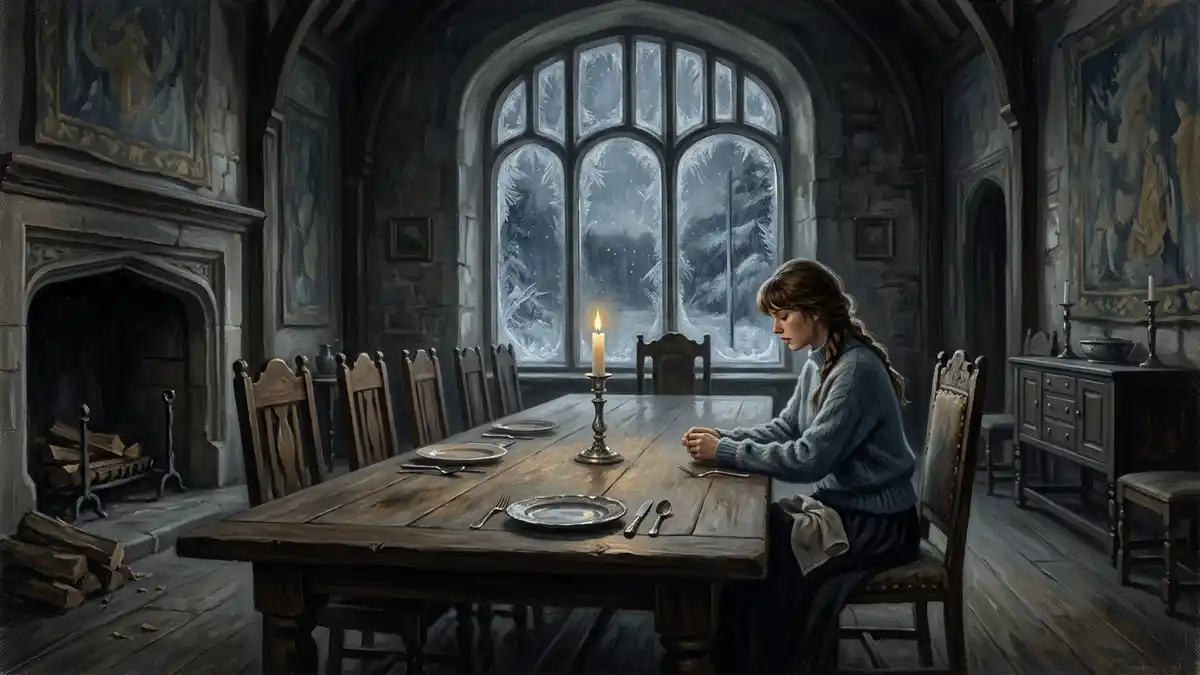

For Tolerate It Taylor Swift lyrics, listeners are unpacking one of Evermore’s most critically praised deep cuts. Evermore—Taylor Swift’s ninth studio album, released December 11, 2020—continues the creative partnership with Aaron Dessner, Jack Antonoff, and Swift that defined the Folklore era, folding indie folk, alternative rock, and chamber pop into a mature, literary songwriting style. “Tolerate It,” track five, is a masterclass in quiet devastation: devotion met with indifference.
The song’s emotional violence is subtle—plates set with care, love offered like a gift, and a partner who responds with politeness rather than passion. For a broader introduction to Swift’s career and releases, see our hub page for Taylor Swift. Below: background on the track, a lyrics placeholder, interpretive analysis, and four common reader questions.
About Tolerate It
“Tolerate It” is track five on Evermore and one of the album’s most discussed showcases for Swift’s narrative precision. Produced by Aaron Dessner, the song builds its tension through domestic imagery and a steadily mounting sense of imbalance: the narrator performs love as service, attention, and reverence, while the other person receives it with the emotional equivalent of a nod. Critics often highlight the track for its controlled performance and its refusal to comfort the listener with a tidy resolution.
Swift has noted creative inspiration connected to Daphne du Maurier’s novel Rebecca, a story steeped in unequal power, erasure, and the cruelty of being measured against an ideal you can never become. While “Tolerate It” is not a one-to-one adaptation, the novel’s atmosphere—being watched, being diminished, being expected to perform gratitude for scraps—resonates through the lyrics. The song feels like a modern echo of that psychological terrain, translated into a relationship where affection is administered like charity.
On Evermore, “Tolerate It” also sharpens the album’s exploration of adult heartbreak beyond melodrama. There are no shouting matches required for the wound to be deep; sometimes the quietest dynamic is the most humiliating. Dessner’s production tends to give Swift space—room for small vocal details to land—so the listener hears not only what is said, but what is withheld. That restraint makes the title word hit like a verdict.
Tolerate It Lyrics
I sit and watch you reading with your head low
I wake and watch you breathing with your eyes closed
I sit and watch you
I notice everything you do or don’t do
You’re so much older and wiser and I
I wait by the door like I’m just a kid
Use my best colors for your portrait
Lay the table with the fancy shit
And watch you tolerate it
If it’s all in my head, tell me now
Tell me I’ve got it wrong somehow
I know my love should be celebrated
But you tolerate it
I greet you with a battle hero’s welcome
I take your indiscretions all in good fun
I sit and listen
I polish plates until they gleam and glisten
You’re so much older and wiser and I
I wait by the door like I’m just a kid
Use my best colors for your portrait
Lay the table with the fancy shit
And watch you tolerate it
If it’s all in my head, tell me now
Tell me I’ve got it wrong somehow
I know my love should be celebrated
But you tolerate it
While you were out building other worlds, where was I?
Where’s that man who’d throw blankets over my barbed wire?
I made you my temple, my mural, my sky
Now I’m begging for footnotes in the story of your life
Drawing hearts in the byline
Always taking up too much space or time
You assume I’m fine, but what would you do if I
Break free and leave us in ruins
Took this dagger in me and removed it
Gain the weight of you then lose it
Believe me, I could do it
If it’s all in my head, tell me now
Tell me I’ve got it wrong somehow
I know my love should be celebrated
But you tolerate it
I sit and watch you
Meaning and Analysis
The central idea of “Tolerate It” is emotional asymmetry. Swift’s narrator is not merely unloved in a dramatic, operatic sense; she is tolerated—kept, managed, occasionally acknowledged, but not truly chosen. The lyrics weaponize politeness: the horror is not always outright cruelty, but the steady drip of being treated as inconvenient background. That dynamic can be harder to name than betrayal, which is part of why the song resonates so widely. Many listeners recognize the feeling of giving elaborate proof of love to someone who responds as if you are asking for too much simply by existing fully.
The domestic table setting and caretaking motifs turn love into labor, and labor into performance. Swift suggests a narrator trained to anticipate needs, smooth edges, and translate her own hunger into something palatable. When that effort is met with tolerance rather than reciprocity, self-worth begins to erode—not because the narrator is weak, but because the relationship’s structure rewards self-erasure. The Rebecca-tinged shadow amplifies the theme of comparison: you can feel as if you are auditioning for a role someone else has already defined without you.
Musically, the song’s slow burn supports a reading of delayed realization. The listener is not always hit immediately; the discomfort accumulates as details stack. By the time the emotional stakes become explicit, you understand why this track is often ranked among Swift’s strongest Evermore work: it trusts subtlety, it respects pain without glamorizing it, and it offers no fake fairy-tale ending—only the courage of naming the truth out loud.
Frequently Asked Questions
What is “Tolerate It” about?
The song portrays a relationship where one partner’s devotion is not reciprocated with equal care; instead, their love is merely tolerated, creating a quiet but painful power imbalance.
Was “Tolerate It” inspired by Rebecca?
Swift has connected the song to inspiration from Daphne du Maurier’s novel Rebecca, particularly themes of unequal emotional power, erasure, and feeling diminished within a partnership.
Who produced “Tolerate It”?
Aaron Dessner produced “Tolerate It,” consistent with the atmospheric, narrative-driven indie folk and alternative textures on much of Evermore.
Which album contains “Tolerate It” and when was it released?
“Tolerate It” is track five on Taylor Swift’s ninth studio album, Evermore, released December 11, 2020.