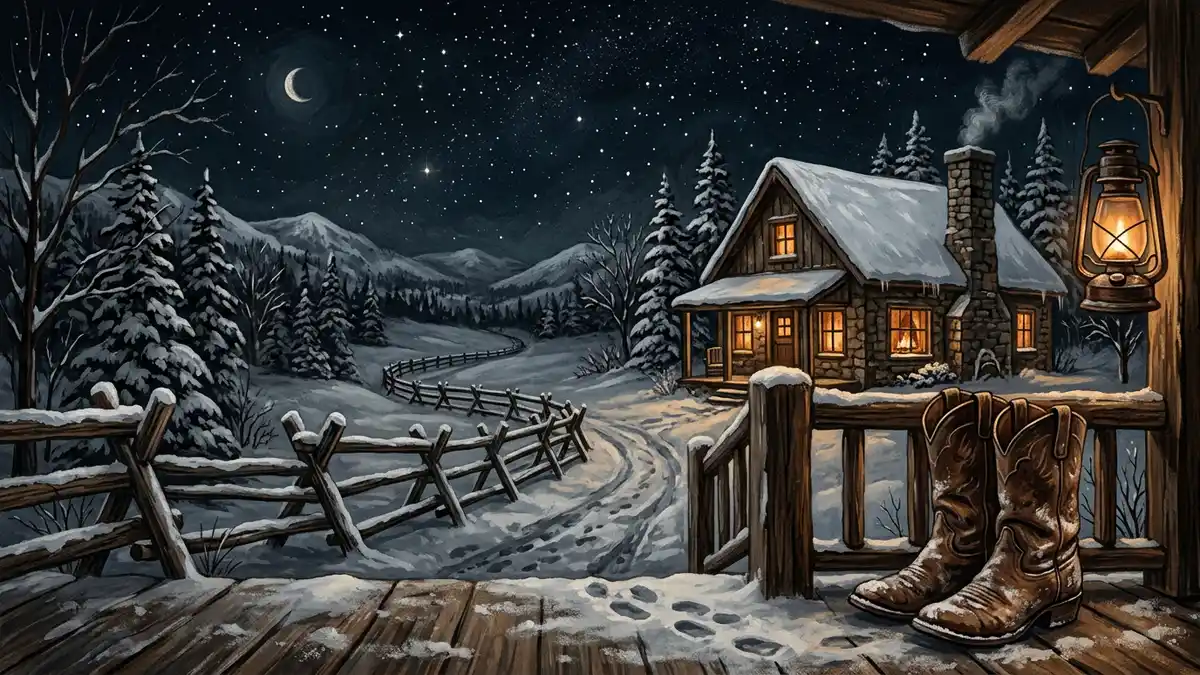

Cowboy Like Me Taylor Swift lyrics saddle up one of Evermore’s most romantic slow burns: a story about two hustlers who recognize each other’s games—and accidentally trade their armor for tenderness. Evermore, Taylor Swift’s ninth studio album, arrived December 11, 2020, as the companion chapter to Folklore, shaped by Aaron Dessner, Jack Antonoff, and Swift with a sonic blend of indie folk, alternative rock, and chamber pop. Track eleven leans into country-tinged warmth without retreating from the album’s literary storytelling, and Marcus Mumford’s backing vocals add a gospel-adjacent depth that makes the confession feel communal, as if the whole room already knew these two were doomed to fall for real.
About Cowboy Like Me
“Cowboy Like Me” is produced by Aaron Dessner, and its arrangement prioritizes atmosphere: a patient tempo, instruments that breathe, and a vocal performance that can whisper intimacy without losing clarity. The song’s premise—two con artists targeting wealthy marks—could play as pure swagger, but Swift’s writing steers it toward vulnerability. The narrators are skilled performers in social rooms, yet they discover an authenticity with each other that their usual performances cannot fake.
Mumford’s presence on backing vocals is a subtle but significant texture. It widens the emotional space, suggesting witnesses, harmony, or even conscience—depending on how you hear it. Combined with Dessner’s production instincts, the track becomes a ballad that feels both grounded and cinematic, like a late-night scene in a film where the camera finally holds still long enough for characters to admit what they want.
Country influences surface in cadence, imagery, and romantic fatalism rather than genre posturing. That fits Evermore’s broader project: Swift revisiting rootsy musical languages through the lens of indie arrangement, letting nostalgia and modern restraint coexist. As track eleven, “Cowboy Like Me” also serves as a pivot toward the album’s closing stretch—still reflective, but increasingly willing to name survival, softness, and the strange luck of finding love where you least expect it.
Cowboy Like Me Lyrics
And the tennis court was covered up
With some tent-like thing
And you asked me to dance
But I said: Dancing is a dangerous game
Oh, I thought
This is gonna be one of those things
Now I know
I’m never gonna love again
I’ve got some tricks up my sleeve
Takes one to know one
You’re a cowboy like me
Never wanted love, just a fancy car
Now I’m waiting by the phone
Like I’m sitting in an airport bar
You had some tricks up your sleeve
Takes one to know one
You’re a cowboy like me
Perched in the dark
Telling all the rich folks anything they wanna hear
Like it could be love
I could be the way forward
Only if they pay for it
You’re a bandit like me
Eyes full of stars
Hustling for the good life
Never thought I’d meet you here
It could be love
We could be the way forward
And I know I’ll pay for it
You’re a cowboy like me
Perched in the dark
Telling all the rich folks anything they wanna hear
Like it could be love
I could be the way forward
Only if they pay for it
You’re a bandit like me
Eyes full of stars
Hustling for the good life
Never thought I’d meet you here
It could be love
We could be the way forward
And I know I’ll pay for it
And the skeletons in both our closets
Plotted hard to fuck this up
And the old men that I’ve swindled
Really did believe I was the one
And the ladies lunching have their stories about
When you passed through town
But that was all before I locked it down
Now you hang from my lips
Like the Gardens of Babylon
With your boots beneath my bed
Forever is the sweetest con
I’ve had some tricks up my sleeve
Takes one to know one
You’re a cowboy like me
And I’m never gonna love again
I’m never gonna love again
I’m never gonna love again
Meaning and Analysis
Studying Cowboy Like Me Taylor Swift lyrics means engaging with a classic narrative twist: the grifters who become each other’s exception. The song is interested in performance as identity—how people learn to charm rooms, mimic sincerity, and protect themselves with stories. When two narrators share the same skill set, intimacy becomes riskier because recognition cuts deeper. The romance is not “innocent” in a fairy-tale sense; it is earned through mutual understanding of masks.
Imagery of moneyed settings, borrowed grandeur, and transient luxury underscores emotional hunger. The marks are not the emotional center; they represent the hollow theater the protagonists usually inhabit. Against that backdrop, real affection feels disruptive—almost inconvenient—because it demands honesty from people who survive on plausible deniability. Swift’s lyricism allows warmth without sanding down moral complexity: you can enjoy the love story while still sensing the lives these characters lived before the song’s moment of grace.
The slow ballad tempo reinforces the theme that this love unfolds reluctantly, then completely. Fast songs can suggest impulse; this one suggests a dawning certainty, the kind that arrives after a thousand practiced smiles. For listeners tracing Swift’s narrative range, “Cowboy Like Me” is a reminder that her folklore-evermore era can inhabit outsiders and anti-heroes without losing emotional precision—because the point is never glamorizing deceit, but dramatizing what happens when deceit meets its match and collapses into something truer.
Placed near the end of the standard Evermore tracklist, the song also reads like a quiet reward for listeners who enjoy Swift’s more novelistic impulses: it is romantic without being sugary, specific without being exploitative, and musically patient enough to let each lyrical reveal land. Mumford’s harmonies underline the sense that this confession might be too big for one voice alone—love, even when it arrives late, can feel like a chorus you did not know you were allowed to join. That emotional generosity is part of why the track endures in fan playlists long after the album’s initial surprise release settled into canon.
Frequently Asked Questions
When was Evermore released?
Evermore was released on December 11, 2020. It is Taylor Swift’s ninth studio album, created with Aaron Dessner, Jack Antonoff, and Swift.
Who produced “Cowboy Like Me”?
Aaron Dessner produced “Cowboy Like Me.” The track is a slow, romantic ballad with country influences woven into Evermore’s indie-folk palette.
Who sings backing vocals on “Cowboy Like Me”?
Marcus Mumford contributes backing vocals, adding harmonic depth and a rootsy warmth that complements the song’s storytelling.
What is “Cowboy Like Me” about?
The song follows two con artists who fall in love with each other instead of the wealthy people they target. It explores performance, vulnerability, and unexpected sincerity.