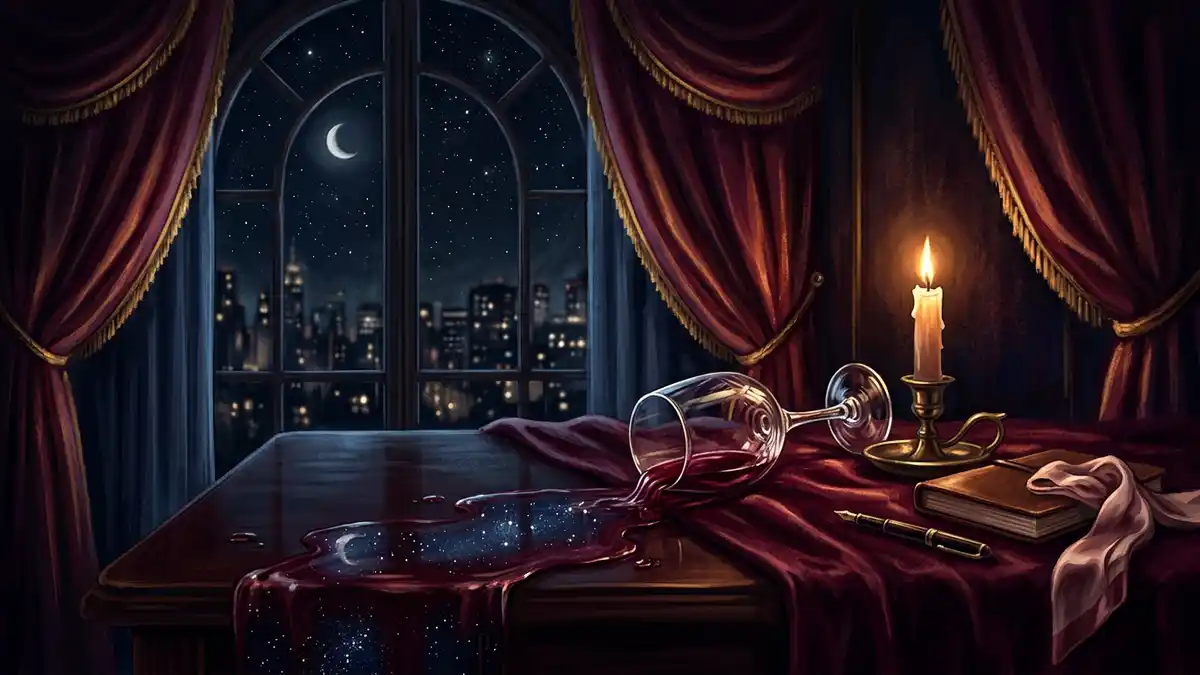

Fans searching for Maroon Taylor Swift lyrics are often drawn to the song’s rich color metaphor and its place early on Midnights (2022). Maroon Taylor Swift lyrics continue Taylor Swift’s long tradition of using specific hues as emotional shorthand, while pushing the idea into a deeper, duskier register than the bright scarlet nostalgia of her earlier work. Released October 21, 2022, as part of her tenth studio album, the track sits in a sequence obsessed with sleepless memory—those thoughts that feel more vivid when the world goes quiet. This article outlines the song’s background, leaves room for the full lyric text, and unpacks what “maroon” might mean as a mature, complicated kind of heartbreak.
Table of Contents
About Maroon
Maroon is the second track on Midnights, the album Taylor Swift released as her tenth studio project on October 21, 2022. Across the record, Swift returns again and again to the psychology of midnight: the mind replaying old scenes, re-noticing small details, and re-feeling emotions with uncomfortable clarity. As track two, Maroon deepens the album’s color language—after the lavender fog of the opener, the palette shifts to something darker and more saturated, suggesting memory that has aged like wine or velvet. Readers who want a wider lens on the album’s concept, chart history, and track list can consult the Midnights album Wikipedia entry for sourced context.
The song was co-written with Jack Antonoff, a collaborator whose production style on Swift’s later albums frequently blends organic warmth with electronic haze. On Maroon, the arrangement tends toward the atmospheric: space around the vocal, textures that feel like rooms half-remembered, and a sense that the narrator is not telling a story in strict chronological order but sifting through fragments. That dreamlike quality is part of why listeners describe the track as “cinematic”—it sounds like memory with the lights turned low.
One of the song’s most discussed ideas is its relationship to Swift’s earlier use of red as a metaphor for all-consuming love and loss. Where “red” can read as urgent, frontal, and almost neon in emotional intensity, maroon suggests something deeper, heavier, and more complex—a color you cannot mistake for innocence. Fans and critics often frame Maroon as a more adult shading of the same emotional spectrum: not simply “I felt passionately,” but “I still carry the stain.” That distinction matters on Midnights, an album that repeatedly asks what happens when youthful feelings settle into adult residue.
Lyrically, the song’s sensory details—scents, locations, textures—work alongside the title to create a unified mood board. Swift’s writing here is less interested in courtroom specifics than in the way memory tinges everything the same color. In the broader album narrative, Maroon helps establish that Midnights will explore intimacy as something that leaves pigment behind: you can move on and still see the wash on the wall when the lights are off.
Maroon Lyrics
When the morning came
We were cleaning incense off your vinyl shelf
‘Cause we lost track of time again
Laughing with my feet in your lap
Like you were my closest friend
How’d we end up on the floor, anyway?
You say: Your roommate’s cheap-ass screw-top rosé, that’s how
I see you every day now
And I chose you
The one I was dancing with
In New York, no shoes
Looked up at the sky and it was
The burgundy on my t-shirt
When you splashed your wine into me
And how the blood rushed into my cheeks
So scarlet, it was
The mark they saw on my collarbone
The rust that grew between telephones
The lips I used to call home
So scarlet, it was maroon
When the silence came
We were shaking, blind and hazy
How the hell did we lose sight of us again?
Sobbing with your head in your hands
Ain’t that the way shit always ends?
You were standing hollow-eyed in the hallway
Carnations you had thought were roses, that’s us
I feel you, no matter what
The rubies that I gave up
And I lost you
The one I was dancing with
In New York, no shoes
Looked up at the sky and it was maroon
The burgundy on my t-shirt
When you splashed your wine into me
And how the blood rushed into my cheeks
So scarlet, it was (maroon)
The mark they saw on my collarbone
The rust that grew between telephones
The lips I used to call home
So scarlet, it was (maroon)
And I wake with your memory over me
That’s a real fucking legacy, legacy (it was maroon)
And I wake with your memory over me
That’s a real fucking legacy to leave
The burgundy on my t-shirt
When you splashed your wine into me
And how the blood rushed into my cheeks
So scarlet, it was maroon
The mark they saw on my collarbone
The rust that grew between telephones
The lips I used to call home
So scarlet, it was maroon
It was maroon
It was maroon
Meaning and Analysis
Interpreting Maroon Taylor Swift lyrics begins with treating color as an emotional technology in Swift’s songwriting. Across her discography, she repeatedly uses concrete images—autumn leaves, lipstick, streetlights—to anchor abstract feelings. Maroon, as a metaphor, suggests something that is not cleanly “good” or “bad” but richly ambiguous: passion that has cooled into something that still marks you, or closeness that became complicated without becoming meaningless. The song’s imagery often reads like snapshots arranged out of order, which mirrors how memory actually behaves in the middle of the night.
The contrast with Red-era symbolism also invites a literary reading about maturation. Early albums can feel like diaries written in primary colors; Midnights often operates in mixed light. Maroon fits that thesis by refusing a simple moral. The narrator does not necessarily ask for sympathy or blame the other person cleanly; instead, the lyrics dwell in atmosphere—what it felt like, what it still feels like when a certain song, smell, or phrase pulls you back. That approach makes the track especially compelling for listeners who appreciate Swift’s ability to compress years into a single repeated image.
Finally, the song’s placement as track two encourages a listening strategy: treat Midnights as a suite of moods rather than a single plot. Maroon does not resolve the night; it thickens it. The analysis therefore is less about “what literally happened” and more about how the mind colors the past when you cannot sleep—how love stories become tones, textures, and temperatures. In that sense, maroon is not only a color; it is a filter the narrator cannot remove.
FAQs
What is Maroon about?
Maroon uses the deep red shade as a metaphor for a complex past relationship and the way memories become saturated with a specific emotional color—often interpreted as a more mature, nuanced evolution of Swift’s earlier red imagery.
Which album includes Maroon?
Maroon appears on Midnights, Taylor Swift’s tenth studio album, released on October 21, 2022.
Who did Taylor Swift write Maroon with?
Maroon was co-written with Jack Antonoff, continuing their long-running collaboration on Swift’s pop and alternative-leaning productions.
How does Maroon relate to Red?
Listeners often compare Maroon to Swift’s earlier use of red as a symbol of intense romance and heartbreak, interpreting maroon as a darker, more layered shade that suggests older memories and more complicated emotional residue.