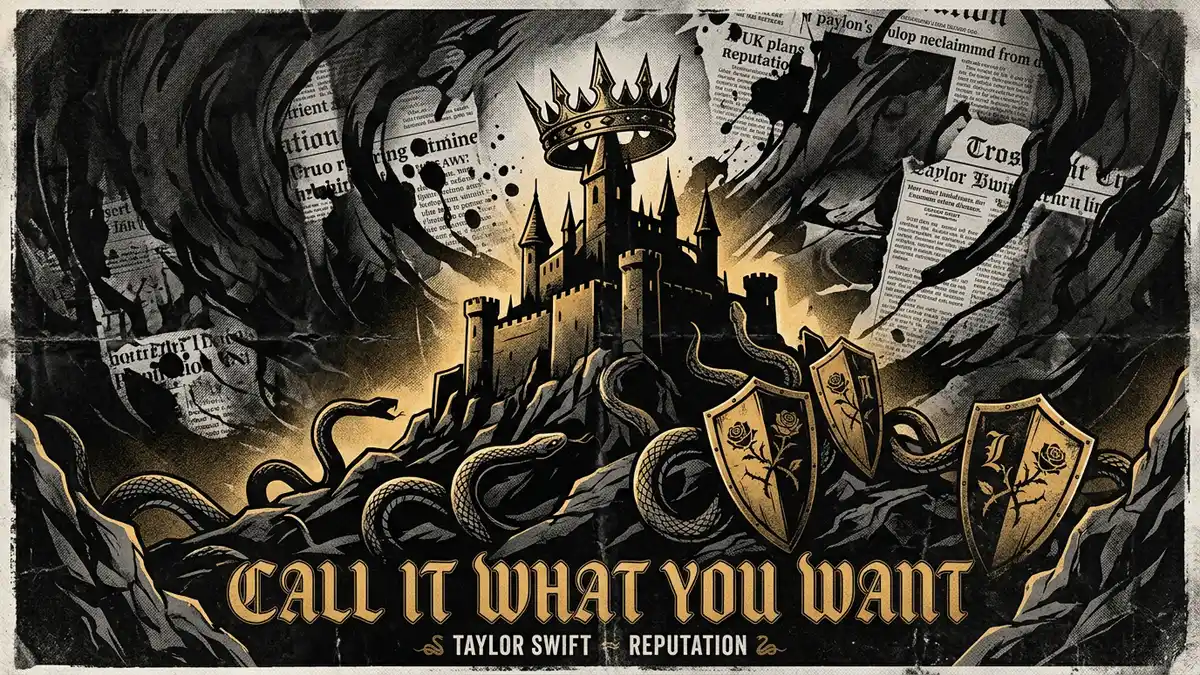

Call It What You Want Taylor Swift Lyrics document one of Reputation’s gentlest promotional moments: a warm, dreamy synth-pop single that arrived November 3, 2017, one week before the full album dropped on November 10, 2017. As Taylor Swift’s sixth studio album, Reputation is remembered for its darker electropop palette and hip-hop-influenced cadences, largely shaped by producers including Jack Antonoff, Max Martin, and Shellback across the tracklist. Antonoff produced “Call It What You Want,” and the song immediately signaled that the record would contain tenderness as well as teeth. For listeners mapping the original 2017 era—not a Taylor’s Version re-record—this track often functions as the emotional exhale between tabloid warfare and private peace. Background on Swift’s career and releases can be explored through Taylor Swift archives and album guides.
Table of Contents
About Call It What You Want
As a pre-album single, “Call It What You Want” had a specific marketing job: reassure fans that Reputation was not only a fortress of snarling synths and celebrity clapbacks. Jack Antonoff’s production wraps Swift’s vocals in soft pads, steady midtempo grooves, and a glowing harmonic bed that feels like night driving with the city lights smeared in rain. The sonic signature is “warm synth-pop”: electronic, yes, but rounded at the edges, prioritizing comfort over aggression. That choice made the single a natural playlist companion to the album’s more romantic deep cuts.
Thematically, the song is about finding a relationship that feels like shelter when the outside world is loud, judgmental, and quick to label. Swift frames public chaos—rumors, narratives, scorekeeping—as background noise that loses power when someone sees you plainly. In 2017 fan discourse, listeners widely connected the lyrics to Swift’s relationship with Joe Alwyn, reading lines about low-key loyalty and emotional safety as autobiographical shading. Whether or not one treats those readings as definitive, the song’s core idea is durable: when you are reduced to headlines, intimacy can become a kind of counter-narrative you do not owe the crowd.
On Reputation, “Call It What You Want” helps balance the album’s emotional ledger. Tracks about snakes, revenge fantasies, and sarcastic friendship postmortems need somewhere to land; otherwise the record risks feeling monochromatic. This song provides a clear pivot toward vulnerability without abandoning the album’s modern pop production identity. It also demonstrates Swift’s continued skill at writing hooks that sound effortless—repetition used not as laziness but as mantra, the way someone might repeat a calming phrase when anxiety spikes.
Behind the scenes, the promotional rollout positioned the single as a narrative correction. After months of discourse about Swift’s public image, releasing a track that essentially says “my real life is elsewhere” was strategic storytelling. Antonoff’s involvement ensured sonic continuity with other Swift collaborations from the period, where live-band elements and synth textures interlock. The result is a song that works as standalone pop and as a chapter in a larger album arc about survival, love, and selective privacy in the age of constant surveillance.
Call It What You Want Lyrics
[Verse 1]
My castle crumbled overnight
I brought a knife to a gun fight
They took the crown, but it’s alright
All the liars are calling me one
Nobody’s heard from me for months
I’m doing better than I ever was
[Chorus]
‘Cause my baby’s fit like a daydream
Walking with his head down
I’m the one he’s walking to
So call it what you want, yeah
Call it what you want to
My baby’s fly like a jet stream
High above the whole scene
Loves me like I’m brand new
So call it what you want, yeah
Call it what you want to
[Verse 2]
All my flowers grew back as thorns
Windows boarded up after the storm
He built a fire just to keep me warm
All the drama queens taking swings
All the jokers dressing up as kings
They fade to nothing when I look at him
And I know I make the same mistakes every time
Bridges burn, I never learn
At least I did one thing right
I did one thing right
[Pre-Chorus]
I’m laughing with my lover
Making forts under covers
Trust him like a brother
Yeah, you know I did one thing right
Starry eyes sparking up my darkest night
[Chorus]
My baby’s fit like a daydream
Walking with his head down
I’m the one he’s walking to
So call it what you want, yeah
Call it what you want to
My baby’s fly like a jet stream
High above the whole scene
Loves me like I’m brand new
So call it what you want, yeah
Call it what you want to
[Bridge]
I want to wear his initial
On a chain ’round my neck
Chain ’round my neck
Not because he owns me
But ’cause he really knows me
(Which is more than they can say)
I recall late November
Holding my breath, slowly I said
You don’t need to save me
But would you run away with me?
Yes
[Outro]
My baby’s fit like a daydream
Walking with his head down
I’m the one he’s walking to
So call it what you want, yeah
Call it what you want to
My baby’s fly like a jet stream
High above the whole scene
Loves me like I’m brand new
So call it what you want, yeah
Call it what you want to
(Call it what you want)
(Call it what you want, call it)
(Call it what you want)
(Call it what you want, call it)
(Call it what you want)
(Call it what you want, call it)
(Call it what you want)
(Call it what you want, call it)
(Call it what you want)
(Call it what you want, call it)
Call it what you want, yeah
Call it what you want, to
Meaning and Analysis
Analytically, “Call It What You Want” is a study in reframing. The title itself is a rhetorical shrug aimed at outsiders who want to categorize a relationship for their own consumption. Swift’s narrator refuses to litigate affection in public, opting instead to describe internal stability: who shows up, who listens, who does not treat love like a PR strategy. That stance aligns with Reputation’s broader meditation on who controls the story. If other songs answer noise with confrontation, this one answers with withdrawal into something real.
The dreamy production supports the lyrics’ emotional temperature. Where aggression in pop often reads as sharp transients and harsh highs, warmth here is engineered through sustained tones, gentler percussion, and vocal delivery that stays conversational. Critics sometimes describe the effect as “cinematic romance,” but it is equally accurate to call it therapeutic pop: it lowers the listener’s physiological stress as it narrates finding calm. In that sense, the single was not only promotion but tonal worldbuilding for the album to come.
Finally, the song’s longevity rests on its balance of specificity and vagueness. Enough detail exists to feel personal; enough ambiguity exists for fans to map their own relationships onto it. That dual access is a hallmark of Swift’s songwriting maturity by the late 2010s: she can wink at public context without turning every track into a courtroom exhibit, preserving art’s breathing room while still speaking clearly to those paying attention.