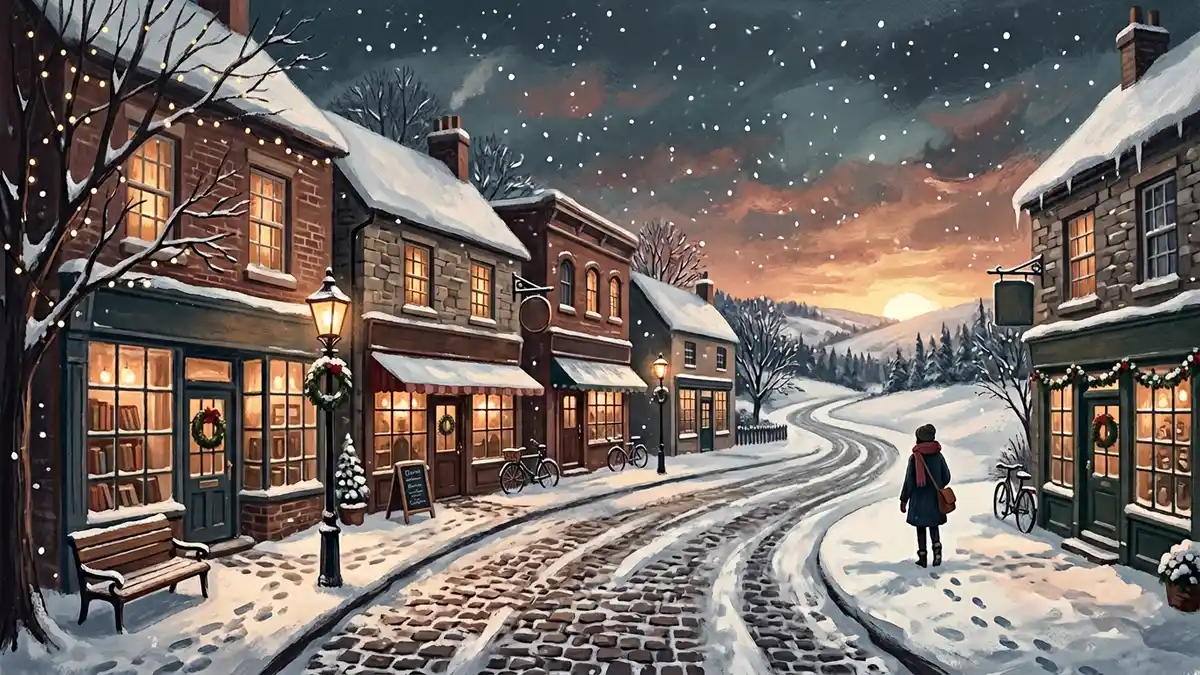

Dorothea Taylor Swift lyrics open a postcard from a small-town vantage point on Evermore, Taylor Swift’s ninth studio album, released December 11, 2020. Co-created with Aaron Dessner, Jack Antonoff, and Swift, Evermore extends the indie-folk and chamber-pop world introduced on Folklore, adding alternative rock shading where the stories call for it. “Dorothea,” placed at track eight, is wistful and cinematic: a voice that stayed behind, speaking toward someone who left for brighter lights, carrying both pride and ache in the same breath. Readers exploring Taylor Swift as a storyteller will find here one of the album’s cleanest examples of character-driven songwriting.
About Dorothea
“Dorothea” is produced by Aaron Dessner, and it functions as a narrative companion piece in the Evermore universe—most notably alongside “’tis the damn season,” which imagines a fleeting return home during a holiday window. Where that song channels a visitor’s perspective, “Dorothea” flips the camera: someone who remained in the quieter geography, addressing a person who chose (or needed) a bigger stage. The result is not petty jealousy so much as longing filtered through familiarity—the kind that knows your old habits and still cheers for you from afar.
The production supports the lyric’s gentle ache with warmth rather than spectacle. Dessner’s palette on Evermore often favors organic instruments, subtle harmonic movement, and arrangements that feel like rooms with lamps on—intimate, slightly golden, a little haunted. “Dorothea” sits comfortably in that lane, letting the vocal lead the scene while the band provides a steady, almost conversational pulse. It is a “small town vs. Hollywood” story without clichéd sneering; the narrator’s love is mixed with realism about distance, time, and diverging paths.
As track eight, “Dorothea” also deepens the album’s sense of a networked cast. Evermore is filled with names, places, and implied histories, and this song rewards repeat listening because its emotional information lives as much in tone as in plot. You can hear affection in how the verses address Dorothea directly, and you can hear melancholy in the way the chorus widens the lens, as if the speaker is imagining her life in a city that will never quite include them the same way again.
Dorothea Lyrics
Hey, Dorothea, do you ever stop and think about me?
When we were younger, down in the park
Honey, making a lark of the misery
You got shiny friends since you left town
A tiny screen’s the only place I see you now
And I got nothing but well wishes for ya
Oh, this place is the same as it ever was
Oh, but you won’t like it that way
It’s never too late to come back to my side
The stars in your eyes shined brighter in Tupelo
And if you’re ever tired of being known for who you know
You know, that you’ll always know me, Dorothea (uh, uh)
Dorothea (ah, ah)
Oh, you’re a queen sellin’ dreams, sellin’ make up in magazines
Oh, from you I’d buy anything
Hey, Dorothea, do you ever stop and think about me?
When it was calmer, skipping the prom just to piss off your mom
And her pageant schemes
And damn, Dorothea, they all wanna be ya
But are you still the same soul I met under the bleachers?
Well
Oh, I guess I’ll never know
Oh, and you’ll go on with the show
But it’s never too late to come back to my side
The stars in your eyes shined brighter in Tupelo
And if you’re ever tired of being known for who you know
You know, you’ll always know me, Dorothea (uh, uh)
Dorothea (ah, ah)
Ooh, ooh
Ooh-woo-ooh-ooh-ooh, ooh-ooh-ooh-ooh
Ooh, ooh
Ooh-woo-ooh-ooh-ooh, ooh-ooh-ooh
Dorothea (ah, ah, ah)
Ah, ah
Meaning and Analysis
Interpreting Dorothea Taylor Swift lyrics often centers on the tension between rootedness and ambition. The narrator’s voice suggests a relationship history that cannot be reduced to a single label—friend, old flame, confidant—because adult connections rarely fit one word. What matters is the emotional truth: someone important left, and the person singing is still tethered to the memory of who they were together, even as Dorothea’s public self becomes more distant, more glittering, more abstract.
The song’s strength is its generosity. It does not punish Dorothea for leaving; instead, it dramatizes the gentle grief of watching someone you care about become a story the world shares. That generosity is a hallmark of Swift’s folklore-evermore era, where characters are allowed contradictions and where nostalgia is not always sweet—it can be sharp, too, like cold air in the lungs. Listeners often connect the track to themes of home, identity, and the way success changes how people see you, and how you see yourself.
Structurally, direct address (“Hey Dorothea”) makes the listener feel like they are overhearing something sincere, almost private, which heightens the intimacy. The lyrics trade in specific images—familiar streets, old jokes, the ache of wondering whether fame feels as lonely as it looks—without needing to explain every detail. That narrative economy is part of why the song lingers: it invites you to fill in the blanks with your own almost-Dorotheas, your own almost-homes, your own almost-forevers that became something else when the road forked.
Frequently Asked Questions
What album is “Dorothea” from?
“Dorothea” is from Evermore, Taylor Swift’s ninth studio album, released December 11, 2020. The album is a sister project to Folklore and features indie folk, alternative rock, and chamber pop influences.
Who produced “Dorothea”?
Aaron Dessner produced “Dorothea,” consistent with much of Evermore’s organic, narrative-led sound.
How does “Dorothea” relate to “’tis the damn season”?
Fans and critics often pair the two songs as companion narratives. “’tis the damn season” focuses on a temporary homecoming, while “Dorothea” is told from the perspective of someone who stayed behind, addressing Dorothea after she left for a bigger life.
What is the mood of “Dorothea”?
The song is wistful and longing, mixing affection with the sadness of distance. It is romantic about memory without insisting the past can be reclaimed unchanged.