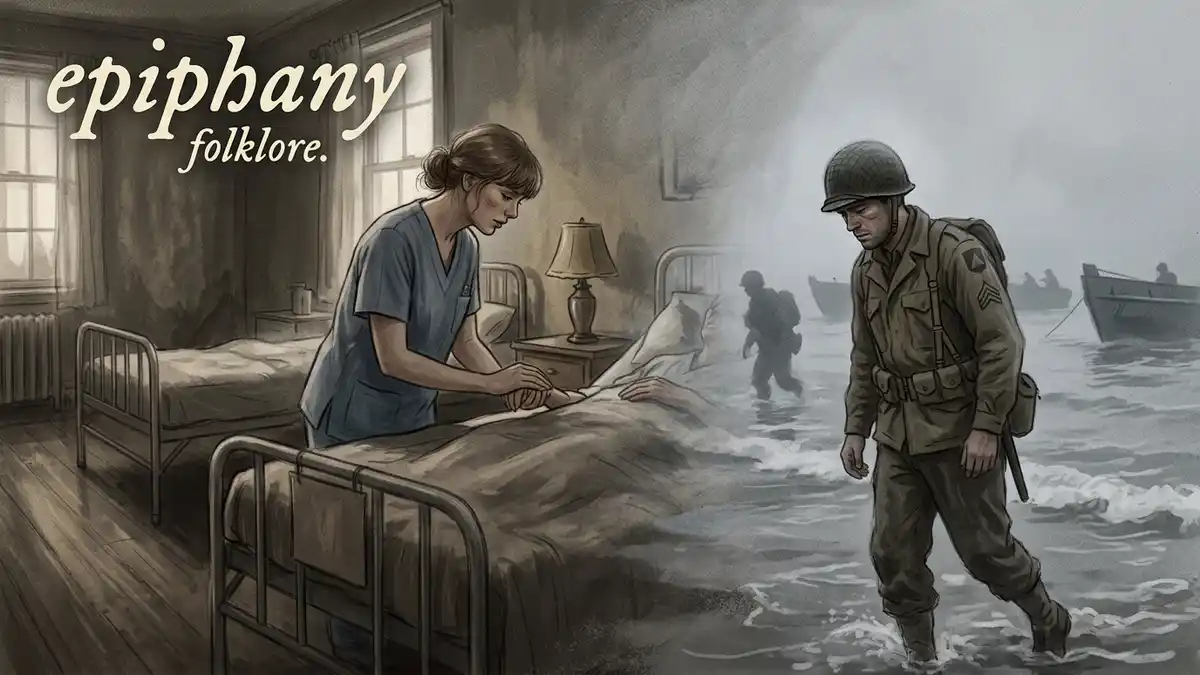

Few songs in Taylor Swift‘s discography carry the emotional gravity of “epiphany,” the thirteenth track on her critically acclaimed 2020 album Folklore. The epiphany Taylor Swift lyrics draw a haunting parallel between the horrors of World War II and the devastating toll of the COVID-19 pandemic on frontline healthcare workers. Released as part of Swift’s surprise quarantine album on July 24, 2020, the song stands as one of the most solemn and reverent compositions she has ever recorded. With its ambient, hymn-like production crafted alongside Aaron Dessner of The National, “epiphany” transcends the personal storytelling Swift is known for and enters the realm of collective grief and sacrifice.
About epiphany
“epiphany” was written by Taylor Swift and Aaron Dessner during the spring of 2020, a period when the world was grappling with the initial shock of the COVID-19 pandemic. The song is deeply rooted in Swift’s family history, specifically the wartime experiences of her maternal grandfather, Dean, who served in the United States military during World War II. Dean was stationed at Guadalcanal, one of the bloodiest campaigns in the Pacific Theater, where American forces endured brutal conditions and devastating losses. Swift channeled the stories passed down through her family into the song’s opening verses, painting a vivid picture of young soldiers arriving on a beach, uncertain of their fate.
The second half of the song shifts from the battlefields of the 1940s to the hospital corridors of 2020, drawing a direct comparison between soldiers fighting for survival and healthcare workers battling an invisible enemy. Dessner’s production choices are integral to the song’s atmosphere. The track features layered, ethereal synthesizers, soft piano chords, and a deliberate absence of percussion. The result is something closer to a meditation or a hymn than a traditional pop song. Swift’s vocal delivery is restrained and almost whispered, as though she is speaking in a sacred space where raising one’s voice would feel inappropriate.
Within the context of Folklore, “epiphany” serves as a moment of quiet reflection amid an album filled with narrative fiction and emotional exploration. While many tracks on the record tell stories of imagined characters, “epiphany” is grounded in real history and real-world events. The song was widely praised by critics for its sensitivity and its ability to honor sacrifice without sentimentality. It remains one of the most understated yet powerful tracks in Swift’s entire catalog, a testament to her growth as a songwriter willing to explore subject matter far beyond the boundaries of pop music.
epiphany Lyrics
Keep your helmet, keep your life, son
Just a flesh wound, here’s your rifle
Crawling up the beaches now
Sir, I think he’s bleeding out
And some things you just can’t speak about
With you I serve, with you I fall down, down
Watch you breathe in, watch you breathing out, out
Something med school did not cover
Someone’s daughter, someone’s mother
Holds your hand through plastic now
Doc, I think she’s crashing out
And some things you just can’t speak about
Only twenty minutes to sleep
But you dream of some epiphany
Just one single glimpse of relief
To make some sense of what you’ve seen
With you I serve, with you I fall down, down
Watch you breathe in, watch you breathing out, out
With you I serve, with you I fall down, down
Watch you breathe in, watch you breathing out, out
Only twenty minutes to sleep
But you dream of some epiphany
Just one single glimpse of relief
To make some sense of what you’ve seen
Meaning and Analysis of epiphany
The meaning of “epiphany” lies in the recognition that certain experiences are so overwhelming, so fundamentally life-altering, that they can never be fully communicated to those who were not present. The song’s central lyric — “keep your helmet, keep your life, son / just a flesh wound, here’s your gun” — captures the grim pragmatism of wartime survival, where soldiers had no choice but to suppress their trauma and continue fighting. Swift uses this imagery to draw a direct line to the experiences of doctors and nurses during the pandemic, who watched patients die in isolation, separated from their families, while shouldering an impossible emotional burden. The “epiphany” of the title refers not to a sudden moment of joy or revelation, but to the crushing realization that some pain is too vast to share.
Musically, the song’s ambient production mirrors the emotional numbness that follows extreme trauma. There are no dramatic crescendos or cathartic releases in the arrangement. Instead, the track drifts like a fog, allowing the weight of the lyrics to settle gradually on the listener. The repeated refrain — “with you I serve, with you I fall down” — unites the two timelines of the song, suggesting that whether on a battlefield or in a hospital ward, the fundamental human experience of fighting alongside others and watching them fall remains unchanged across generations. Swift’s decision to layer her own harmonies into an almost choral arrangement in the final section reinforces the hymn-like quality, transforming the song into something that feels like a prayer for the fallen.
What makes “epiphany” particularly remarkable is its restraint. In lesser hands, a song comparing wartime sacrifice to pandemic heroism could easily become maudlin or exploitative. Swift avoids this by keeping the language spare and the emotions contained. She does not tell the listener how to feel; instead, she presents two parallel experiences and allows the connection to emerge organically. The song also avoids political commentary, focusing entirely on the human cost rather than assigning blame. This universality is part of what makes “epiphany” so enduring — it speaks to anyone who has ever witnessed suffering they could not prevent and carried that weight in silence. As a piece of songwriting, it represents one of Swift’s most mature and compassionate achievements.
FAQs about epiphany
Who wrote epiphany?
“epiphany” was written by Taylor Swift and Aaron Dessner. Dessner, best known as a member of the indie rock band The National, co-produced the track and created the ambient, hymn-like instrumental arrangement that defines the song’s atmosphere.
What is epiphany about?
“epiphany” draws a parallel between the experiences of World War II soldiers on the battlefield and healthcare workers fighting the COVID-19 pandemic. The song explores the idea that certain traumatic experiences are so overwhelming that they cannot be fully communicated to others.
Is epiphany about Taylor Swift’s grandfather?
Yes, the first part of the song is inspired by Taylor Swift’s maternal grandfather, Dean, who served in the U.S. military during World War II and was stationed at Guadalcanal. Swift drew on family stories about his wartime experiences to write the opening verses.
What album is epiphany on?
“epiphany” is the thirteenth track on Taylor Swift’s eighth studio album, Folklore, which was released as a surprise album on July 24, 2020. The album won Album of the Year at the 63rd Grammy Awards.