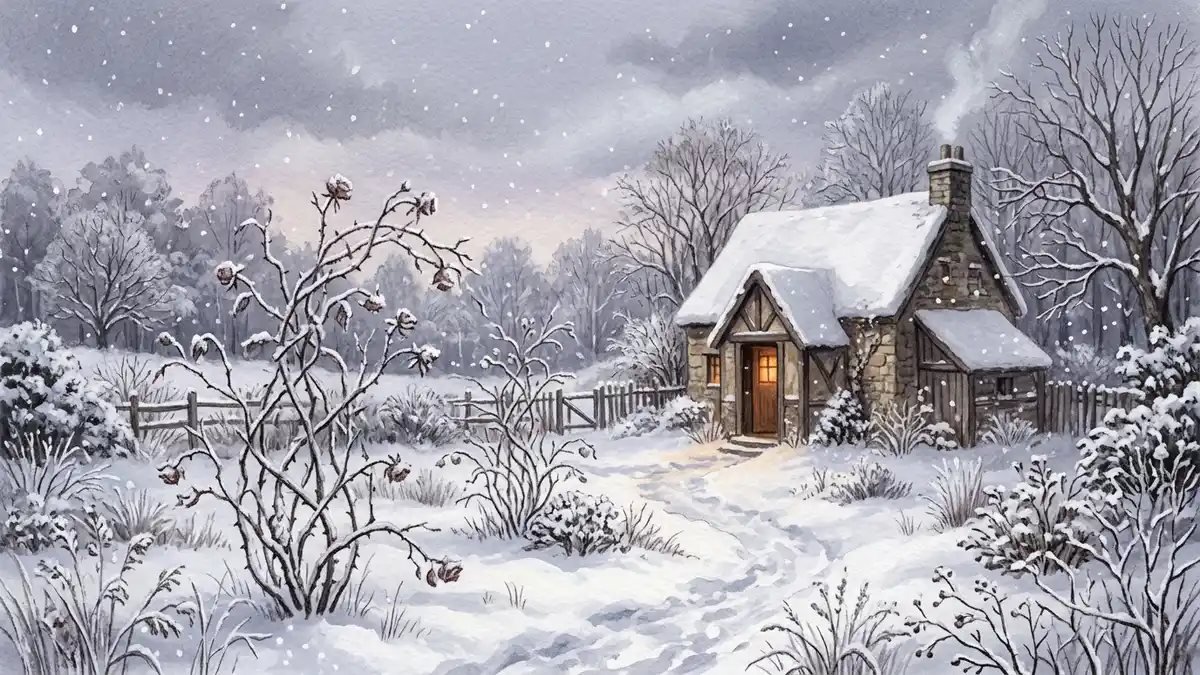

Happiness Taylor Swift lyrics invite listeners into one of the most emotionally layered songs on Evermore, the ninth studio album Taylor Swift surprise-released on December 11, 2020. A sister project to the indie-folk landmark Folklore, Evermore was crafted with Aaron Dessner, Jack Antonoff, and Swift herself, blending chamber pop textures with alternative rock shading. “Happiness” sits at track seven and refuses easy catharsis: it is a song about endings that still admit tenderness, memory, and the strange coexistence of joy and sorrow after love changes shape.
About Happiness
“Happiness” is produced by Aaron Dessner, whose work across Evermore helped define its autumnal, narrative-forward sound. Where some breakup songs chase a single emotional color, this track lingers in the gray zone: regret without villainy, grief without forgetting the good. The arrangement supports that psychology with a slow build—instruments accumulate in layers rather than exploding—so the listener feels time passing and feelings rearranging themselves.
Swift has described the song as an examination of how sadness and recognition can coexist with the idea that happiness still exists somewhere in the world, even if it no longer lives in the same room as the relationship. That framing matters for how the lyrics operate. “Happiness” is not a victory lap; it is a reckoning with maturity, with the uncomfortable truth that you can miss someone and still know you cannot go back, or that you can feel wrecked and still be honest about what was beautiful.
On an album that leans into indie folk and alternative textures, “Happiness” functions as a centerpiece of emotional precision. It pairs naturally with other Dessner-helmed studies in ambivalence, yet it stands out for its willingness to name happiness directly while the narrator is still sorting through the wreckage. The production’s patient pacing makes space for lyrical detail—small domestic images, half-remembered warmth, and the ache of trying to speak cleanly about something messy.
Happiness Lyrics
Honey, when I’m above the trees
I see this for what it is
But now I’m right down in it, all the years I’ve given
Is just shit we’re dividin’ up
Showed you all of my hiding spots
I was dancing when the music stopped
And in the disbelief, I can’t face reinvention
I haven’t met the new me yet
There’ll be happiness after you
But there was happiness because of you
Both of these things can be true
There is happiness
Past the blood and bruise
Past the curses and cries
Beyond the terror in the nightfall
Haunted by the look in my eyes
That would’ve loved you for a lifetime
Leave it all behind
And there is happiness
Tell me, when did your winning smile
Begin to look like a smirk?
When did all our lessons start to look like weapons
Pointed at my deepest hurt?
I hope she’ll be a beautiful fool
Who takes my spot next to you
No, I didn’t mean that
Sorry, I can’t see facts through all of my fury
You haven’t met the new me yet
There’ll be happiness after me
But there was happiness because of me
Both of these things I believe
There is happiness in our history
Across a great divide
There is a glorious sunrise
Dappled with the flickers of light
From the dress I wore at midnight
Leave it all behind
And there is happiness
I can’t make it go away by making you a villain
I guess it’s the price I pay for seven years in Heaven
And I pulled your body into mine every goddamn night
Now I get fake niceties
No one teaches you what to do
When a good man hurts you
And you know you hurt him too
Honey, when I’m above the trees
I see it for what it is
But now my eyes leak acid rain on the pillow
Where you used to lay your head
After giving you the best I had
Tell me what to give after that
All you want from me now is the green light of forgiveness
You haven’t met the new me yet
But I think she’ll give you that
There’ll be happiness after you
But there was happiness because of you too
Both of these things can be true
There is happiness in our history
Across a great divide
There is a glorious sunrise
Dappled with the flickers of light
From the dress I wore at midnight
Leave it all behind
Oh, leave it all behind
Leave it all behind
And there is happiness
Meaning and Analysis
Read closely, Happiness Taylor Swift lyrics work less like a verdict and more like a therapist’s careful language after a long session: boundaries, compassion, and the refusal to turn a shared past into a cartoon. The song’s power comes from its tonal discipline. Swift does not need to shout to convey devastation; she can let a plain sentence carry the weight of everything unsaid. That restraint mirrors the theme—happiness as a concept that survives even when a particular love story does not.
The metaphorical language often returns to seasons, light, and domestic space, which is consistent with the folklore-evermore universe’s cinematic intimacy. Listeners frequently interpret the track as being about the complexity of leaving, or being left, without needing a single “bad guy.” Instead, the narrative honors intertwined identities: two people who built a world together and now must decide what language to use when that world ends. The song asks whether you can tell the truth and still be kind, whether you can grieve without rewriting history into something false.
Musically, the slow build encourages a form of listening that matches the lyrics’ emotional arc. Early verses can feel almost confessional and quiet; as more texture arrives, the song begins to feel like memory stacking on memory—comfort and pain arriving at once. That duality is the point. “Happiness” argues that emotional adulthood is not the absence of longing; it is the ability to hold contradictory feelings without demanding that one erase the other. For fans tracing Swift’s songwriting evolution, the track is a standout example of how her later work uses understatement as drama, trusting the audience to meet the song halfway. Returning to it on repeat listens often reveals new lines that felt gentle at first but cut deeper once you know where the story lands.
Frequently Asked Questions
Which album is “Happiness” on and when was it released?
“Happiness” appears on Taylor Swift’s ninth studio album, Evermore, which was released on December 11, 2020. Evermore is widely regarded as a companion album to Folklore.
Who produced “Happiness”?
Aaron Dessner produced “Happiness.” His production fingerprints—layered organic instrumentation and a patient, cinematic build—are central to the song’s atmosphere.
What is “Happiness” about thematically?
The song explores how happiness can still be acknowledged as real even when a relationship ends. It focuses on grief, memory, and emotional nuance rather than a simple breakup narrative.
How does “Happiness” fit within Evermore’s sound?
Evermore blends indie folk, alternative rock, and chamber pop. “Happiness” aligns with the album’s introspective, narrative-driven songwriting and Dessner-led arrangements.