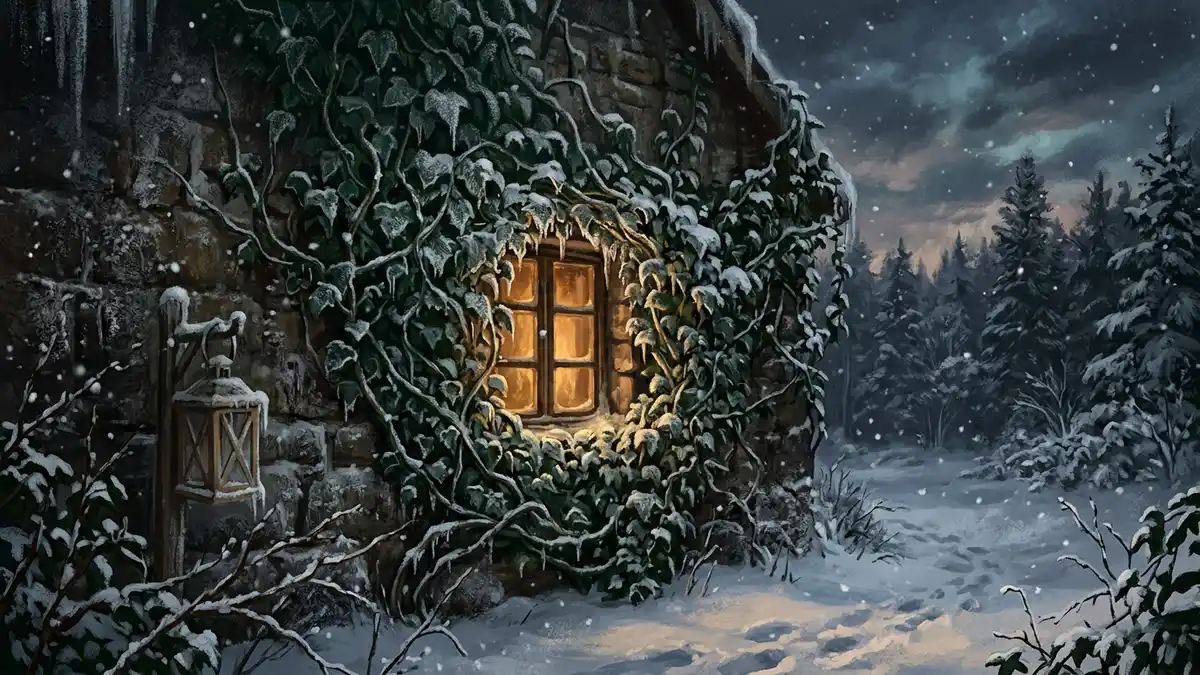

Ivy Taylor Swift lyrics wind through one of Evermore’s most discussed deep cuts: a forbidden-love story told with folk imagery, moral tension, and a melody that feels like smoke drifting through floorboards. Evermore is Taylor Swift’s ninth studio album, surprise-released on December 11, 2020 as a sister set to Folklore. Produced alongside Aaron Dessner, Jack Antonoff, and Swift herself, the record moves fluidly between indie folk, alternative rock, and chamber pop. At track ten, “Ivy” stands out for its tactile metaphors—ivy overtaking a house becomes desire overtaking caution—and for banjo-tinged instrumentation that keeps the song rooted in earthy tradition even as the narrative turns dangerously romantic.
About Ivy
“Ivy” is produced by Aaron Dessner, whose arrangements across the folklore-evermore era often favor organic textures, subtle harmonic turns, and rhythms that feel like footsteps on gravel. Here, the banjo and folk-leaning instrumentation do more than decorate the track—they reinforce the song’s central metaphor. Ivy is invasive, persistent, beautiful, and destructive depending on who is telling the story; the arrangement’s brightness and forward motion mirror attraction’s momentum, the way feelings can grow faster than judgment.
As a deep cut, “Ivy” has become a fan favorite partly because it refuses easy moral packaging. The album’s broader aesthetic—literary, cinematic, willing to sit with ambiguity—gives the song room to be seductive without endorsing every choice the narrator makes. That complexity is part of Swift’s songwriting maturation in this period: she writes characters who want things they are not supposed to want, and she lets the listener feel the heat without handing them a tidy verdict.
Within Evermore’s sequencing, “Ivy” deepens the album’s autumn-and-winter emotional palette. It sits near other narratives about longing, consequence, and identities split between duty and desire. Dessner’s production keeps the vocal intimate while allowing instrumental flourishes to suggest the wildness creeping in at the edges—like vines finding cracks in stone, or secrets finding cracks in a life built for appearances.
Ivy Lyrics
How’s one to know?
I’d meet you where the spirit meets the bones
In a faith forgotten land
In from the snow
Your touch brought forth an incandescent glow
Tarnished but so grand
And the old widow goes to the stone every day
But I don’t, I just sit here and wait
Grieving for the living
Oh, goddamn
My pain fits in the palm of your freezing hand
Taking mine, but it’s been promised to another
Oh, I can’t
Stop you putting roots in my dreamland
My house of stone, your ivy grows
And now I’m covered in you
I wish to know
The fatal flaw that makes you long to be
Magnificently cursed
He’s in the room
Your opal eyes are all I wish to see
He wants what’s only yours
Oh, goddamn
My pain fits in the palm of your freezing hand
Taking mine, but it’s been promised to another
Oh, I can’t
Stop you putting roots in my dreamland
My house of stone, your ivy grows
And now I’m covered
Clover blooms in the fields
Spring breaks loose, the time is near
What would he do if he found us out?
Crescent Moon, coast is clear
Spring breaks loose, but so does fear
He’s gonna burn this house to the ground
How’s one to know?
I’d live and die for moments that we stole
On begged and borrowed time
So tell me to run
Or dare to sit and watch what we’ll become
And drink my husband’s wine
Oh, goddamn
My pain fits in the palm of your freezing hand
Taking mine, but it’s been promised to another
Oh, I can’t
Stop you putting roots in my dreamland
My house of stone, your ivy grows
And now I’m covered in you
And I’m covered in you
So yeah, it’s a fire
It’s a goddamn blaze in the dark
And you started it
You started it
So yeah, it’s a war
It’s the goddamn fight of my life
And you started it
You started it
Oh, I can’t
Stop you putting roots in my dreamland
My house of stone, your ivy grows
And now I’m covered in you, in you
Now I’m covered in you
In you
Meaning and Analysis
Approaching Ivy Taylor Swift lyrics as literary text, the central metaphor does heavy lifting. A house—often a symbol of marriage, stability, inheritance, and social expectation—becomes entangled with growth that cannot be fully controlled. Ivy suggests something both natural and transgressive: feelings that arrive without permission and refuse to leave on schedule. The narrator’s language frequently balances rapture with dread, which is exactly how secrecy feels when stakes are high.
Listeners interpret the song through many lenses: historical fiction, queer reading, archetypal adultery narrative, or purely fictional character study. Swift’s era-specific writing style—specific nouns, conversational bridges, vivid sensory cues—makes all these readings possible without collapsing the song into one “correct” headline. What remains constant is the psychological realism: desire portrayed as warmth and danger intertwined, and guilt as something that does not instantly cancel attraction but complicates it.
Musically, the folk elements matter to meaning, not only mood. Folk storytelling traditions often accommodate moral ambiguity and communal judgment; a narrator can confess without asking for absolution. “Ivy” benefits from that lineage. The chorus’s lift can feel like escape, while verses can feel like the cramped rooms where choices are actually made. Together, lyrics and production create a paradox the song refuses to solve—some vines look like ruin from one window and like beauty from another.
On a tracklist filled with wintry character studies, “Ivy” also benefits from how clearly it signals stakes: not every Evermore song makes the listener feel the cost of desire in both social and emotional currency. The banjo and folk phrasing can evoke older American song forms, which subtly reinforces the idea of stories passed down, secrets whispered across porches, and communities that notice more than they say aloud. That historical overtone is not mandatory for enjoyment—many fans connect purely to the melody and the tension—but it deepens the reading for anyone who likes Swift’s fiction-first songwriting. Revisiting the song after other album narratives often makes its images feel even sharper, as if the ivy has had another year to grow in your imagination.
Frequently Asked Questions
What album is “Ivy” on?
“Ivy” is on Evermore, released December 11, 2020. Evermore is Taylor Swift’s ninth studio album and companion to Folklore.
Who produced “Ivy”?
Aaron Dessner produced “Ivy.” The track features folk-influenced instrumentation, including banjo, that supports its metaphor-driven storytelling.
What is “Ivy” about?
The song tells a story of forbidden love using the metaphor of ivy growing over a house—desire that spreads, persists, and complicates a settled life.
Why is “Ivy” considered a beloved deep cut?
Fans often praise its vivid imagery, emotional tension, and nuanced treatment of desire and consequence. Its folk textures and memorable metaphor help it stand out on Evermore.