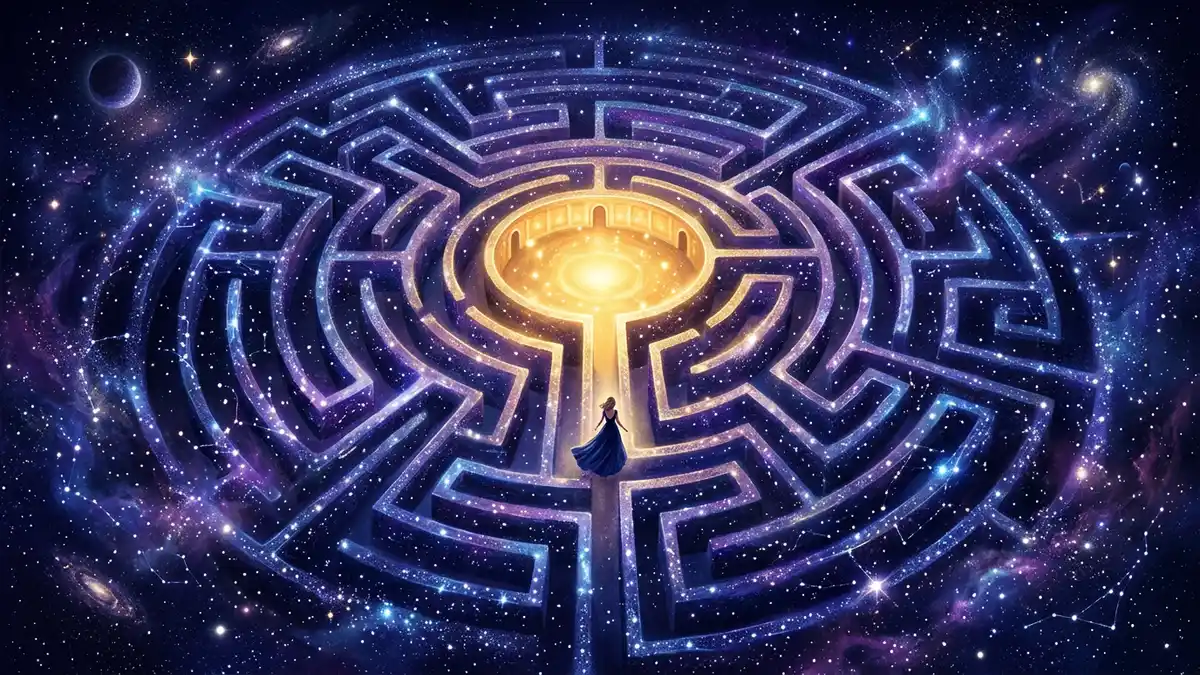

If you are searching for Labyrinth Taylor Swift lyrics, this article offers a guided tour through one of the most hypnotic slow burns on Midnights. “Labyrinth” is a dreamy, atmospheric track about the disorienting feeling of falling for someone when you still remember how badly falling hurt before. Released as part of Swift’s tenth studio album on October 21, 2022, the song uses a maze metaphor not to sound clever for its own sake, but to describe how love can feel like losing your bearings—in the best and scariest ways at once.
Below you will find background on the song’s placement and collaborators, a section reserved for the complete lyric text, a closer reading of its imagery and emotional arc, and a concise FAQ. Whether you are listening with headphones on a quiet night or trying to understand a specific metaphor, the structure is designed to support both context and interpretation without replacing your own relationship to the music.
Table of Contents
About Labyrinth
“Labyrinth” is the tenth track on Midnights, Taylor Swift’s tenth studio album. The project is frequently described as a concept record about thoughts that arrive after dark—rumination, desire, anxiety, and the strange clarity that can appear when the day’s distractions fall away. If you want a broad, externally maintained summary of the album’s release and cultural footprint, the Midnights Wikipedia page is a helpful anchor while you explore individual songs like “Labyrinth.”
Swift co-wrote “Labyrinth” with Jack Antonoff, and the collaboration is audible in the track’s layered, hazy production. The instrumentation and vocal treatment often feel submerged—soft edges, repeating motifs, and a tempo that resists rushing. Rather than delivering a punchy pop hook designed for immediate singalong, “Labyrinth” invites the listener to settle into a mood. That approach matches the lyrical content, which is concerned with vulnerability, hesitation, and the vertigo of new feelings arriving before you have fully healed from old ones.
The central metaphor compares emotional experience to moving through a labyrinth: corridors that look alike, turns that confuse your sense of direction, and the sense that you are descending even when you tell yourself you are only exploring. In Swift’s hands, the maze is not necessarily a trap laid by someone else; it can be the mind’s own architecture, shaped by memory and fear. Falling—another recurring image—becomes both literal-sounding and symbolic, suggesting loss of control, surrender, and the stomach-dropping moment when you realize you are farther in than you planned to go.
Fans often connect “Labyrinth” to Swift’s long-running interest in writing about emotional whiplash: the gap between what you know logically and what you feel instinctively. After heartbreak, the brain can build defenses; a new connection can feel like testing those defenses in real time. The song’s atmosphere makes space for ambivalence—hope without certainty, tenderness without guarantees—rather than forcing a neat resolution. That ambiguity is part of why the track resonates on an album explicitly framed around sleeplessness: nights are when ambivalence feels loudest.
As track ten, “Labyrinth” also arrives late in the standard track list, when listeners have already traveled through multiple emotional climates on Midnights. The placement encourages a reflective listen: not the opening statement, not the final word, but a moment of inward drift where Swift slows the tempo and lets the lyrics breathe. The layered vocals contribute to that dreamlike quality, as if the song is thinking in echoes, repeating feelings until they become a texture rather than a single sharp thought.
Labyrinth Lyrics
It only hurts this much right now
Was what I was thinking the whole time
Breathe in, breathe through, breathe deep, breathe out
I’ll be getting over you my whole life
You know how scared I am of elevators, never trusted it
If it rises fast, it can’t last
Oh, oh, I’m falling in love
Oh, no, I’m falling in love again
Oh, I’m falling in love
I thought the plane was going down
How’d you turn it right around?
It only feels this raw right now
Lost in the labyrinth of my mind
Break up, break free, break through, break down
You would break your back to make me break a smile
You know how much I hate that everybody just expects me to bounce back
Just like that
Oh, oh, I’m falling in love
Oh, no, I’m falling in love again
Oh, I’m falling in love
I thought the plane was going down
How’d you turn it right around?
Oh, oh, I’m falling in love
Oh, no, I’m falling in love again
Oh, I’m falling in love
I thought the plane was going down
How’d you turn it right around?
Oh, oh, I’m falling in love
Oh, no, I’m falling in love again
Oh, I’m falling in love
I thought the plane was going down
How’d you turn it right around?
Oh, oh, I’m falling in love (falling in love)
Oh, no, I’m falling in love again (falling in love again)
Oh, I’m falling in love (falling in love)
I thought the plane was going down
How’d you turn it right around?
You know how much I hate it
You know how much I hate it
You know how much I hate it
Meaning and Analysis
“Labyrinth” succeeds because its metaphor does double duty: it describes romance and anxiety as intertwined experiences. A labyrinth suggests complexity, repetition, and the fear of not finding an exit; it also suggests something constructed, even beautiful, designed to be wandered. Swift’s writing asks whether falling again is foolishness or courage, and refuses to offer a simplistic verdict. Instead, the song dramatizes the internal argument—the part of you that remembers pain and the part of you that still wants connection—until the argument itself becomes the story.
The production’s slow, hypnotic quality reinforces the theme of being pulled under by feeling. Hypnosis is not only a sonic descriptor; it is an emotional one—how obsession can narrow your field of vision, how a person can become a loop you replay. Swift’s use of atmosphere over aggression allows the listener to sit inside uncertainty rather than sprint toward closure. That choice distinguishes “Labyrinth” from more declarative tracks on the album, offering a softer, more meditative shade of midnight.
Finally, the song fits Swift’s broader catalog of love songs that treat intimacy as a risk management problem. She often writes narrators who are self-aware, sometimes painfully so—people who know the history, know the patterns, and still feel the pull. “Labyrinth” is especially effective for listeners who have experienced love after heartbreak, when every kind gesture can feel like a potential prelude to another loss. The lyrics do not mock that fear; they name it, wrap it in melody, and let the listener decide whether falling, here, is disaster or discovery.
FAQs
Who wrote “Labyrinth” with Taylor Swift?
Taylor Swift co-wrote “Labyrinth” with Jack Antonoff.
What is “Labyrinth” about?
The song is a dreamy, atmospheric track about falling in love unexpectedly after heartbreak, using a labyrinth metaphor to describe confusion, vulnerability, and emotional vertigo.
How does “Labyrinth” sound compared to other Midnights tracks?
It is generally described as slow and hypnotic, with layered vocals and a moody, immersive production style that prioritizes atmosphere over a high-energy pop hook.
What track number is “Labyrinth” on Midnights?
“Labyrinth” is track 10 on Midnights, released October 21, 2022, as Taylor Swift’s tenth studio album.