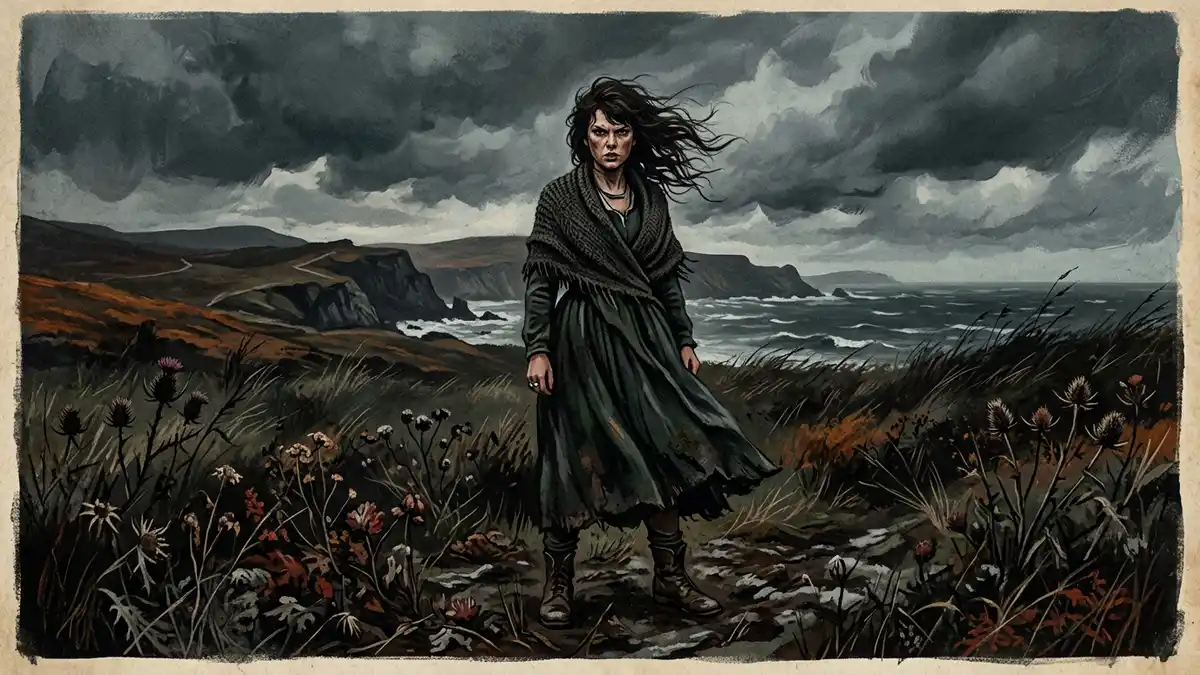

History is full of powerful women who were dismissed as hysterical, irrational, or unhinged simply for daring to stand up for themselves, and “Mad Woman” by Taylor Swift takes that centuries-old double standard and turns it into a simmering, defiant anthem. Featured on her critically acclaimed 2020 album Folklore, this darkly atmospheric track confronts the societal expectation that women should remain silent and composed even when they have been wronged. If you are looking for the mad woman taylor swift lyrics, this article has them along with a deep analysis of the song’s meaning. With its brooding production and razor-sharp lyrics, “Mad Woman” stands as one of Swift’s most pointed and politically charged songs, a meditation on fury, gaslighting, and the unfair rules that govern how women are allowed to express anger.
About Mad Woman
“Mad Woman” is one of the most thematically charged tracks on Taylor Swift’s eighth studio album, Folklore, which was surprise-released on July 24, 2020. The album marked a transformative moment in Swift’s career, as she traded the glossy pop production of previous records for an intimate, indie folk sound created in collaboration with Aaron Dessner of The National and Jack Antonoff. “Mad Woman” was co-written by Swift and Dessner during the COVID-19 quarantine, and it carries a controlled fury that sets it apart from the more wistful and melancholic songs that surround it on the tracklist. The song addresses one of the oldest and most persistent double standards in society: the way female anger is pathologized and dismissed.
While Folklore largely deals in fictional narratives and imagined characters, many fans and critics have interpreted “Mad Woman” as one of the album’s more autobiographical moments. The song is widely believed to address Swift’s highly publicized conflict with music executive Scooter Braun and former label head Scott Borchetta, who acquired the master recordings of Swift’s first six albums in a deal that Swift publicly opposed. The acquisition sparked a public controversy in which Swift was sometimes characterized as overreacting or being unreasonable — precisely the kind of gendered dismissal that the song critiques. Whether or not the song is directly about that specific situation, its themes resonate far beyond any single conflict.
The production of “Mad Woman” is dark, simmering, and atmospheric, built around a moody piano line and layered with subtle textures that create a sense of tension and unease. Dessner crafted a soundscape that feels like the musical equivalent of a storm gathering on the horizon — quiet and ominous, with the promise of something powerful about to break through. Swift’s vocal delivery is deliberately controlled, almost eerily calm, which makes the anger in the lyrics land even harder. She does not scream or rage; instead, she speaks with the measured composure of someone who knows that raising her voice will only be used as evidence against her. This restraint is both a stylistic choice and a thematic statement, perfectly embodying the impossible bind that the song describes.
Mad Woman Lyrics
What did you think I’d say to that?
Does a scorpion sting when fighting back?
They strike to kill, and you know I will
You know I will
What do you sing on your drive home?
Do you see my face in the neighbor’s lawn?
Does she smile?
Or does she mouth: Fuck you forever?
Every time you call me crazy, I get more crazy
What about that?
And when you say I seem angry, I get more angry
And there’s nothing like a mad woman
What a shame she went mad
No one likes a mad woman
You made her like that
And you’ll poke that bear ’til her claws come out
And you find something to wrap your noose around
And there’s nothing like a mad woman
Now I breathe flames each time I talk
My cannons all firin’ at your yacht
They say: Move on; but you know I won’t
And women like hunting witches too
Doing your dirtiest work for you
It’s obvious that wanting me dead
Has really brought you two together
Every time you call me crazy, I get more crazy
What about that?
And when you say I seem angry, I get more angry
And there’s nothing like a mad woman
What a shame she went mad
No one likes a mad woman
You made her like that
And you’ll poke that bear ’til her claws come out
And you find something to wrap your noose around
And there’s nothing like a mad woman
I’m taking my time, taking my time
‘Cause you took everything from me
Watching you climb, watching you climb
Over people like me
The master of spin has a couple side flings
Good wives always know
She should be mad, should be scathing like me, but
No one likes a mad woman
What a shame she went mad
You made her like that
Meaning and Analysis of Mad Woman
At its core, “Mad Woman” is about the impossible position women are placed in when they are mistreated and then judged for reacting. The song describes a scenario in which the narrator is provoked, wronged, or gaslit, and then labeled as crazy, irrational, or bitter when she dares to respond. This is a pattern that plays out everywhere from personal relationships to corporate boardrooms to public life: a woman stays silent, and she is seen as complicit; a woman speaks up, and she is branded as hysterical. Swift illuminates this catch-22 with precision, using the metaphor of a woman’s anger being treated as a spectacle or a pathology rather than a legitimate response to genuine harm.
The song also explores the concept of what happens when you prod someone repeatedly and then express shock that they eventually push back. Swift addresses the people who created the conditions for her anger and then acted surprised or offended when that anger surfaced. There is a biting irony in the lyrics — the narrator observes that the same people who provoked her are now pointing to her reaction as proof that she is the problem. This is a classic gaslighting tactic, and Swift deconstructs it with surgical precision. The song asks a simple but devastating question: what did you think would happen? The answer, of course, is that they expected her to stay quiet, to absorb the mistreatment, and to smile through it all, because that is what women are supposed to do.
Within the context of Folklore, “Mad Woman” serves as the album’s most overtly feminist statement. While other tracks explore gender dynamics more subtly — “The Last Great American Dynasty” reimagines a real woman whose independence made her a target for gossip, and “My Tears Ricochet” examines the power dynamics of a professional betrayal — “Mad Woman” confronts the issue head-on. The song connects Swift’s personal experience to a universal pattern of female suppression, making it both deeply individual and broadly political. It is a song that resonates with anyone who has ever been told to calm down, to not be so sensitive, to be the bigger person — anyone who has been made to feel that their anger is a character flaw rather than a natural human response to injustice. The track remains one of the most discussed and dissected songs in Swift’s catalog, and its message only becomes more relevant with time.
FAQs about Mad Woman
Who wrote Mad Woman?
Mad Woman was co-written by Taylor Swift and Aaron Dessner of The National. Dessner produced the track with its dark, atmospheric sound as part of their extensive collaboration on the Folklore album, which was created remotely during the 2020 quarantine.
What is Mad Woman about?
Mad Woman is about the double standard applied to female anger. The song explores how women are labeled as mad, crazy, or hysterical for reacting to mistreatment, while the people who provoked them face no consequences. It addresses gaslighting, gendered expectations, and the societal pressure on women to remain silent.
Is Mad Woman about Scooter Braun?
While Taylor Swift has not explicitly confirmed it, many fans and critics believe Mad Woman addresses her conflict with music executive Scooter Braun and former label head Scott Borchetta over the acquisition of her master recordings. The song’s themes of being wronged and then labeled as irrational for responding align closely with the public narrative surrounding that dispute.
What album is Mad Woman on?
Mad Woman is featured on Taylor Swift’s eighth studio album, Folklore, which was surprise-released on July 24, 2020. The album won Album of the Year at the 63rd Grammy Awards and is widely regarded as one of the most important albums of the 2020s.