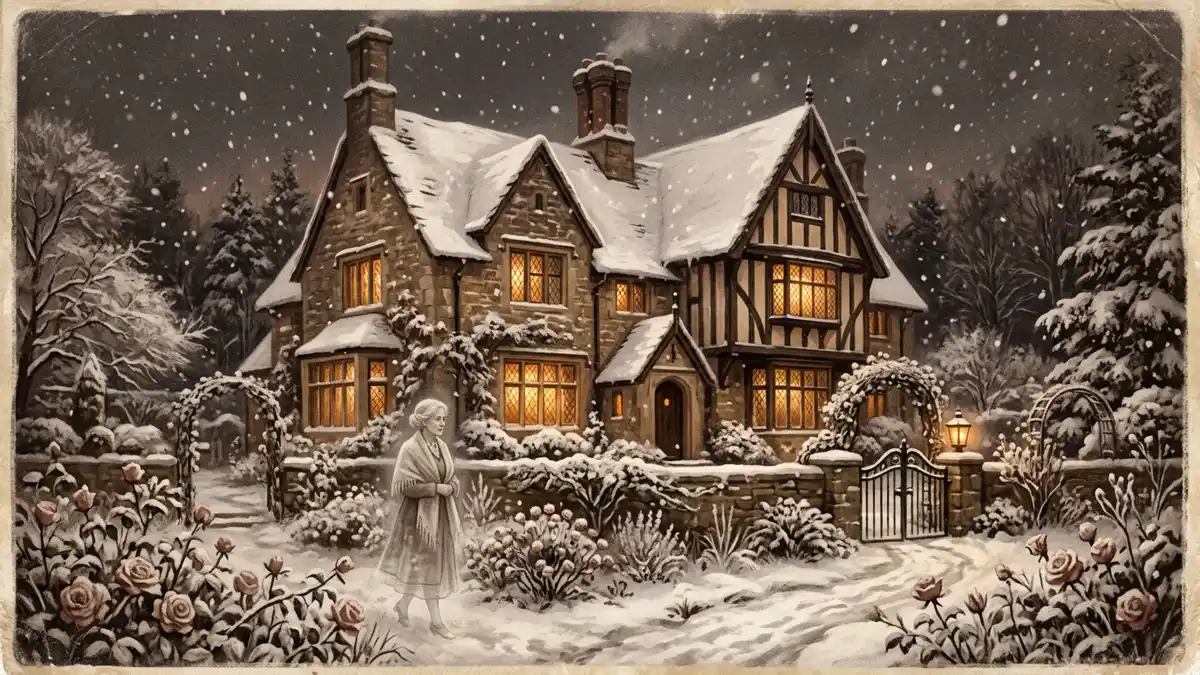

Marjorie Taylor Swift lyrics capture one of the most intimate moments on Evermore, Taylor Swift’s ninth studio album—a sister record to Folklore—released December 11, 2020. Co-produced with Aaron Dessner, “Marjorie” is a tribute to Swift’s late grandmother, Marjorie Finlay, and blends gentle indie-folk textures with archival vocals that make the song feel like a living memory. Fans who follow Taylor Swift know she rarely sounds this unguarded: the track sits near the end of the standard edition, inviting listeners to sit with grief, gratitude, and the idea that love outlasts absence.
About Marjorie
“Marjorie” appears as track 13 on Evermore, a placement that underscores its role as a late-album emotional anchor. Aaron Dessner’s production favors warmth and restraint: soft pulses, airy pads, and a melodic line that never competes with Swift’s storytelling. The song’s most striking creative choice is the inclusion of actual vocal samples of Marjorie Finlay, an opera singer, woven into the arrangement. Those fragments do not function as mere nostalgia; they act as a sonic bridge between generations, suggesting that artistry—and a person’s voice—can echo long after they are gone.
Thematically, “Marjorie” belongs to the album’s broader chamber-pop and indie-folk palette, but its emotional register is distinct from the fictional narratives Swift often crafts. Here, the writing is direct, devotional, and tenderly instructive, as if Swift is both mourning and trying to internalize lessons she wishes she could still hear in person. In the context of Evermore—an album shaped by winter imagery, unresolved feelings, and careful character studies—“Marjorie” stands out as autobiography without spectacle: no villain, no plot twist, only the complicated permanence of family love.
Because Evermore arrived only months after Folklore, listeners often discuss the two records as a paired artistic statement. Where Folklore leans into mythic distance, Evermore sometimes steps closer to confession, and “Marjorie” is a prime example. The song’s intimacy also reflects the creative triangle that defines much of the era: Dessner’s organic instrumentation, occasional contributions from Jack Antonoff on other tracks, and Swift’s sharpened lyric craft as a co-producer of her own sound. On “Marjorie,” that collaboration feels like a hushed room where memory is allowed to be fragile.
Marjorie Lyrics
Never be so kind
You forget to be clever
Never be so clever
You forget to be kind
And if I didn’t know better
I’d think you were talking to me now
If I didn’t know better
I’d think you were still around
What died didn’t stay dead
What died didn’t stay dead
You’re alive, you’re alive in my head
What died didn’t stay dead
What died didn’t stay dead
You’re alive, so alive
Never be so polite
You forget your power
Never wield such power
You forget to be polite
And if I didn’t know better
I’d think you were listening to me now
If I didn’t know better
I’d think you were still around
What died didn’t stay dead
What died didn’t stay dead
You’re alive, you’re alive in my head
What died didn’t stay dead
What died didn’t stay dead
You’re alive, so alive
The autumn chill that wakes me up
You loved the amber skies so much
Long limbs and frozen swims
You’d always go past where our feet could touch
And I complained the whole way there
The car ride back and up the stairs
I should’ve asked you questions
I should’ve asked you how to be
Asked you to write it down for me
Should’ve kept every grocery store receipt
‘Cause every scrap of you would be taken from me
Watched as you signed your name Marjorie
All your closets of backlogged dreams
And how you left them all to me
What died didn’t stay dead
What died didn’t stay dead
You’re alive, you’re alive in my head
What died didn’t stay dead
What died didn’t stay dead
You’re alive, so alive
And if I didn’t know better
I’d think you were singing to me now
If I didn’t know better
I’d think you were still around
I know better
But I still feel you all around
I know better
But you’re still around
Meaning and Analysis
Read closely, “Marjorie” is less a traditional eulogy than a song about continuing education: Swift frames her grandmother as a mentor whose guidance still arrives through remembered phrases, habits, and standards. Lines that emphasize attention to detail—showing up polished, speaking with care, choosing grace—suggest that grief here is intertwined with aspiration. The listener senses Swift measuring herself against an ideal that feels both loving and demanding, which is one reason the track resonates beyond those who know Finlay’s biography. Many people carry a family figure whose approval still shapes their sense of self.
The use of Finlay’s recorded voice deepens the song’s meaning on a metaphorical level as well. Swift’s catalog frequently explores voice as identity—who gets heard, who gets silenced, who controls the narrative. In “Marjorie,” the sampled vocals literalize the idea that a loved one’s voice can remain present in the mind, unexpectedly surfacing in dreams, decisions, and creative work. The production choice is ethically and emotionally delicate; handled poorly, it could feel gimmicky, but Dessner’s treatment keeps the focus on tenderness rather than novelty, letting the textures feel like candlelight rather than spotlight.
Finally, the song’s emotional arc resists easy closure. Swift does not promise that pain disappears or that wisdom arrives neatly packaged; instead, she implies that mourning can coexist with daily effort—keeping notebooks, trying to be kinder, attempting to live up to values that now feel both inspiring and heavy. That ambiguity is what makes “Marjorie” one of the most personal and enduring songs from the Evermore era: it honors a real life without reducing it to symbol, and it invites fans to consider their own inherited voices, literal and figurative, still humming beneath the songs they love.
Frequently Asked Questions
Who is “Marjorie” about on Evermore?
The song is a tribute to Taylor Swift’s late grandmother, Marjorie Finlay, who was an opera singer. Swift honors her memory through intimate lyrics and production that incorporates Finlay’s vocals.
Who produced “Marjorie” on Evermore?
Aaron Dessner produced “Marjorie,” consistent with much of Evermore’s indie-folk and chamber-pop sound. The track’s arrangement supports Swift’s vocals and the layered archival samples.
Does “Marjorie” include Taylor Swift’s grandmother’s voice?
Yes. The song features actual vocal samples of Marjorie Finlay, integrated into the production to create a poignant sense of presence and continuity across generations.
What album is “Marjorie” on and when was it released?
“Marjorie” is track 13 on Evermore, Taylor Swift’s ninth studio album, released December 11, 2020, as a sister album to Folklore.