
Every Taylor Swift album has a Track 5, and devoted fans know that this slot is traditionally reserved for the album’s most emotionally vulnerable and raw song. If you are looking for my tears ricochet Taylor Swift lyrics, you are about to explore one of the most hauntingly personal tracks on Folklore. Released as part of Taylor Swift‘s surprise eighth studio album on July 24, 2020, “my tears ricochet” stands as the only song on Folklore that Swift wrote entirely by herself. With its spectral imagery of funerals, ghosts, and betrayal, the track cuts deeper than almost anything else in Swift’s extensive catalog, offering a devastating meditation on what happens when someone you once trusted becomes the architect of your undoing.
About my tears ricochet
“my tears ricochet” occupies the coveted Track 5 position on Folklore, continuing a tradition that Swift has maintained throughout her career. From “Cold As You” on her debut album to “All Too Well” on Red and “Delicate” on Reputation, Track 5 has consistently been the spot where Swift places her most emotionally exposed work. “my tears ricochet” lives up to this tradition and arguably surpasses it, delivering a song that feels like an open wound set to music. It is also the only track on Folklore written solely by Swift, without the collaborative input of Aaron Dessner or Jack Antonoff on the songwriting side, making it the album’s most undiluted expression of Swift’s inner world.
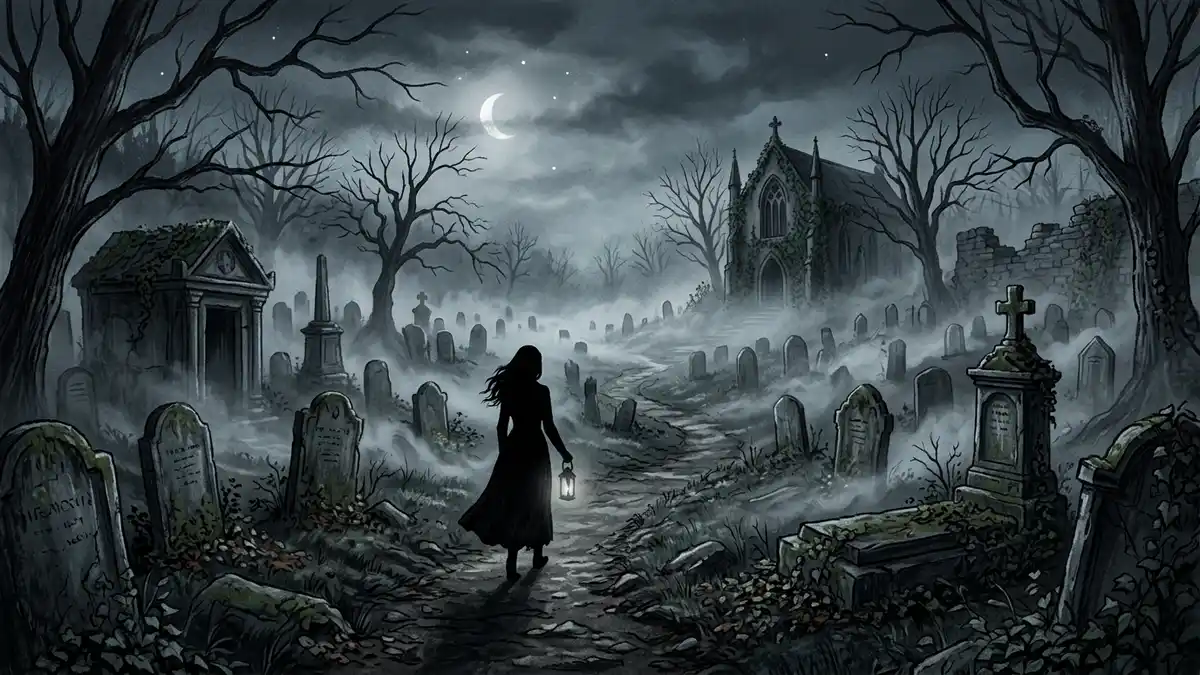
The song employs extended funeral and ghost imagery to tell the story of a profound betrayal. The narrator addresses someone who has turned against them — attending their metaphorical funeral not to mourn but to ensure they stay buried, while simultaneously stealing the legacy they built together. The imagery is striking and sustained throughout the track: coffins, graves, haunting, cursed grounds. Swift creates a scenario in which the narrator is both the deceased and the ghost, someone who has been publicly destroyed by a former ally but refuses to disappear entirely. The production by Jack Antonoff supports this gothic atmosphere with ethereal backing vocals, reverb-drenched instrumentation, and a slow-building arrangement that feels like watching storm clouds gather on the horizon.
While Swift has not explicitly confirmed the song’s subject, the widely accepted interpretation connects “my tears ricochet” to her highly publicized dispute with Scott Borchetta and Scooter Braun over the ownership of her master recordings. In 2019, Braun’s company Ithaca Holdings acquired Big Machine Records, the label Swift had been signed to since she was fifteen, giving Braun control over the masters to her first six albums. Swift described the acquisition as her “worst case scenario” and began re-recording her earlier albums to regain creative ownership. The lyrics of “my tears ricochet” map remarkably well onto this narrative, describing a relationship that began as mentorship and partnership before deteriorating into conflict and perceived betrayal.
my tears ricochet Lyrics
We gather here, we line up, weepin’ in a sunlit room
And if I’m on fire, you’ll be made of ashes, too
Even on my worst day, did I deserve, babe
All the hell you gave me?
‘Cause I loved you, I swear I loved you
Till my dying day
I didn’t have it in myself to go with grace
And you’re the hero flying around, saving face
And if I’m dead to you, why are you at the wake?
Cursing my name, wishing I stayed
Look at how my tears ricochet
We gather stones, never knowing what they’ll mean
Some to throw, some to make a diamond ring
You know I didn’t want to have to haunt you
But what a ghostly scene
You wear the same jewels that I gave you
As you bury me
I didn’t have it in myself to go with grace
‘Cause when I’d fight, you used to tell me I was brave
And if I’m dead to you, why are you at the wake?
Cursing my name, wishing I stayed
Look at how my tears ricochet
And I can go anywhere I want
Anywhere I want, just not home
And you can aim for my heart, go for blood
But you would still miss me in your bones
And I still talk to you (when I’m screaming at the sky)
And when you can’t sleep at night (you hear my stolen lullabies)
I didn’t have it in myself to go with grace
And so the battleships will sink beneath the waves
You had to kill me, but it killed you just the same
Cursing my name, wishing I stayed
You turned into your worst fears
And you’re tossing out blame, drunk on this pain
Crossing out the good years
And you’re cursing my name, wishing I stayed
Look at how my tears ricochet
Meaning and Analysis of my tears ricochet
The central conceit of “my tears ricochet” — a funeral attended by the person responsible for the narrator’s downfall — is one of the most powerful metaphors in Swift’s songwriting. It captures a very specific type of grief: the mourning of a relationship that did not end through natural causes but was actively killed by someone who should have been its protector. The narrator watches their own funeral with a mixture of rage and sorrow, observing the betrayer’s performance of grief while knowing it is hollow. This duality — the simultaneous experience of being mourned and being murdered by the same person — gives the song an almost unbearable emotional intensity.
When analyzed through the lens of the masters dispute, “my tears ricochet” becomes a devastatingly specific account of professional betrayal. Swift signed with Big Machine Records as a teenager, and Scott Borchetta was often described as a mentor and father figure in the early years of her career. The sale of her masters to Scooter Braun, whom Swift has described as a bully, transformed that mentorship into something adversarial. The funeral metaphor works on multiple levels here: Swift is mourning the death of a professional relationship she once valued, the loss of creative works she poured her life into, and the destruction of trust that can never be rebuilt. The ghost imagery suggests that even though Borchetta and Braun may have wanted her to accept the situation quietly, Swift’s presence — and her pain — cannot be so easily dismissed.
Beyond its specific biographical context, “my tears ricochet” speaks to universal experiences of betrayal and the complex emotions that follow. Anyone who has been turned on by a friend, business partner, or family member will recognize the song’s emotional landscape — the disbelief, the anger, the grief, and the strange, persistent love that refuses to die even when the relationship has been irreparably damaged. Swift’s genius here is in capturing not just one emotion but the entire messy spectrum of feelings that coexist after a deep betrayal. The tears “ricochet” because they do not land cleanly on one target; pain, once unleashed, bounces unpredictably, hitting the betrayer, the betrayed, and everyone caught in between. The haunting production and Swift’s restrained, almost whispered vocal delivery make “my tears ricochet” one of the most emotionally complex songs she has ever recorded.
FAQs about my tears ricochet
Who wrote my tears ricochet?
“my tears ricochet” was written solely by Taylor Swift, making it the only song on Folklore without a co-writer. Jack Antonoff produced the track, contributing to its haunting, ethereal sound. The song holds the traditional Track 5 position on the album.
What is my tears ricochet about?
“my tears ricochet” uses funeral and ghost imagery to explore themes of betrayal by someone once trusted. The narrator describes attending their own funeral, watching the person responsible for their downfall perform false grief. It is widely interpreted as being about Swift’s dispute over her master recordings with Scott Borchetta and Scooter Braun.
Is my tears ricochet about the masters dispute?
While Taylor Swift has not explicitly confirmed it, the song is widely believed to reference her conflict with Scott Borchetta and Scooter Braun over the ownership of her master recordings. The lyrics about betrayal by a former ally, stolen legacy, and attending a funeral you caused align closely with the events surrounding the 2019 acquisition of Big Machine Records.
What is the Track 5 tradition?
The Track 5 tradition refers to Taylor Swift’s pattern of placing her most emotionally vulnerable and personal song in the fifth position on each album. Famous Track 5s include “All Too Well” from Red, “Delicate” from Reputation, and “my tears ricochet” from Folklore. Fans consider Track 5 the emotional centerpiece of every Swift album.