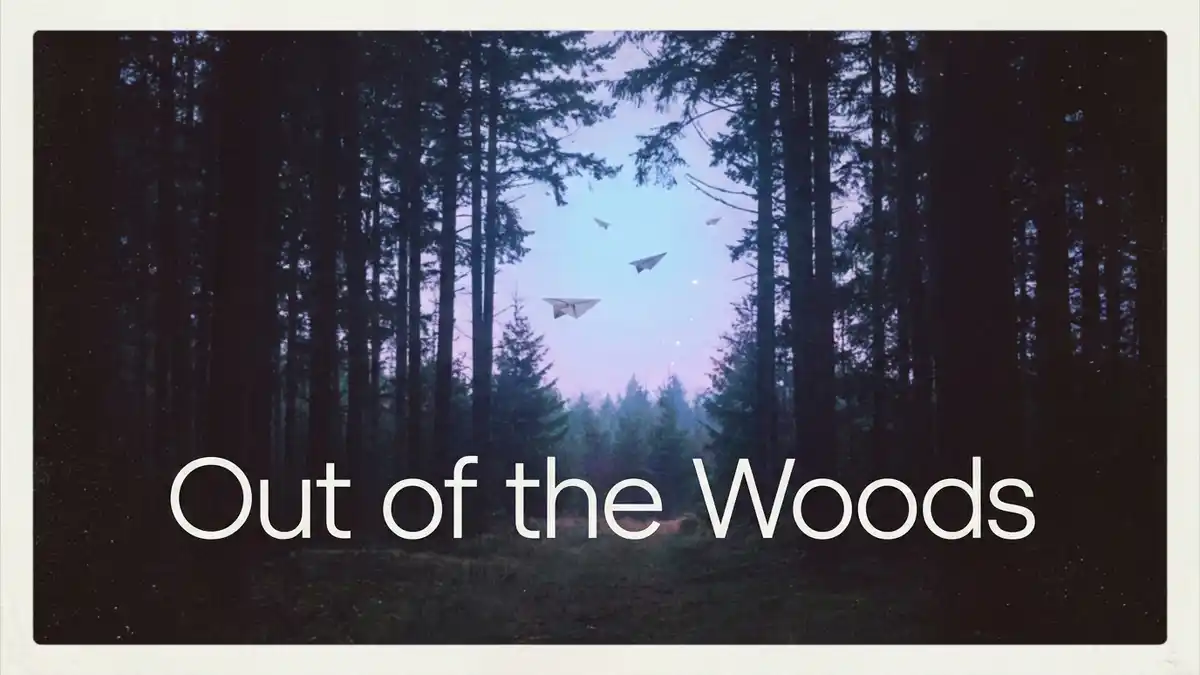

Out of the Woods is a breathless synth-pop sprint on Taylor Swift’s fifth studio album, 1989, released October 27, 2014. That record marked her definitive move from country roots into chart-dominating pop, trading fiddle-friendly arrangements for icy keyboards and urgent percussion. Co-written with Jack Antonoff, Out of the Woods channels relationship anxiety into a relentless forward motion, asking a question fans still quote: are we finally safe, or still lost in the trees?
About Out of the Woods
Swift and Antonoff built Out of the Woods around stacked vocals, stuttering synths, and a chorus that hits like a panic attack resolving into hope. Antonoff’s production fingerprints—big drums, emotional transparency, a slightly retro digital sheen—help the song stand apart from the pure Martin/Shellback formula that shaped other 1989 smashes. That variety mattered for album pacing: after the polish of Welcome to New York and the satire of Blank Space, Swift needed a track that felt rawer and more frantic.
Swift has discussed real-life sparks for the imagery, including a snowmobile accident that underscored how fragile moments can feel when love is unstable. The lyrics dwell on fragile constants—looking down at someone breathing, wondering if the good days are real—while the music refuses to settle. Compared with Ryan Tedder’s city-sized optimism or Max Martin and Shellback’s precision-tooled hooks, this collaboration leans into atmosphere and unease.
The song’s promotional rollout leaned into mystery and visual storytelling, with a music video that leaned on symbolic landscapes and Swift’s 1989 era wardrobe vocabulary. That presentation reinforced the idea of the track as a puzzle: listeners could project their own relationships onto the woods without needing a tabloid decoder ring. In live performance, extended outros and crowd participation often amplified the catharsis of the final chorus, when the arrangement finally offers a sense of forward escape.
On a musicological level, the interplay between minor-key tension and major-key release mirrors the lyric’s push toward hope without guaranteeing safety. It is a textbook example of how Antonoff’s production instincts—layered backing vocals, dramatic lifts, a touch of vintage digital texture—can serve a narrative that might feel wordy in lesser hands. Swift’s decision to foreground vulnerability on a pop album stuffed with hits signaled confidence in her audience’s appetite for emotional complexity.
For readers seeking documented background, Wikipedia’s article on Out of the Woods summarizes release information and chart performance. Swift’s own commentary in interviews and liner-note contexts has been reported by major outlets including The New York Times during the 1989 promotional cycle.
Out of the Woods Lyrics
Verse, pre-chorus, and chorus lyrics for Out of the Woods will be dropped into the placeholder section below.
[Verse 1]
Looking at it now
It all seems so simple
We were lying on your couch
I remember
You took a Polaroid of us
Then discovered (then discovered)
The rest of the world was black and white
But we were in screaming color
And I remember thinking
[Chorus]
Are we out of the woods yet? Are we out of the woods yet?
Are we out of the woods yet? Are we out of the woods?
Are we in the clear yet? Are we in the clear yet?
Are we in the clear yet? In the clear yet? Good
[Verse 2]
Looking at it now
Last December (last December)
We were built to fall apart
Then fall back together (back together)
Ooh, your necklace hanging from my neck, the night we couldn’t quite forget
When we decided, we decided
To move the furniture so we could dance, baby, like we stood a chance
Two paper airplanes flying, flying, flying
And I remember thinking
[Chorus]
Are we out of the woods yet? Are we out of the woods yet?
Are we out of the woods yet? Are we out of the woods?
Are we in the clear yet? Are we in the clear yet?
Are we in the clear yet? In the clear yet? Good
[Bridge]
Remember when you hit the brakes too soon
Twenty stitches in a hospital room
When you started crying, baby, I did too
But when the sun came up, I was looking at you
Remember when we couldn’t take the heat
I walked out, I said, I’m setting you free
But the monsters turned out to be just trees
When the sun came up, you were looking at me
You were looking at me, oh
You were looking at me
[Outro]
Are we out of the woods yet? Are we out of the woods yet?
Are we out of the woods yet? Are we out of the woods?
Are we in the clear yet? Are we in the clear yet?
Are we in the clear yet? In the clear yet? Good
Meaning and Analysis
Out of the Woods is an anxiety anthem disguised as a pop song. Its central metaphor—being lost among trees, searching for clear ground—maps neatly onto the hypervigilance of loving someone when trust keeps slipping. The repetition in the chorus is not lazy writing; it mimics obsessive rumination, the same question asked until it becomes its own sound effect.
Production choices amplify that reading. The track barely lets you catch your breath; even its quieter moments feel charged, as if silence might mean danger. Fans often compare it to running at night with your phone at one percent: adrenaline first, answers later. That kinetic energy made it a standout single even among an album crowded with hits.
Biographical guessing games followed the song, as with much of Swift’s catalog, but the emotional core is broad enough to travel without a tabloid key. Anyone who has dated through uncertainty recognizes the blend of hope and dread—the sense that a relationship can be thrilling and unsustainable at once. Swift’s specificity (accident imagery, medical bandages, fragile breathing) grounds the abstraction.
In the arc of 1989, Out of the Woods proves the album’s pop shift did not mean sacrificing lyrical vulnerability. If anything, the electronic palette made certain emotions starker: there is nowhere for the narrator to hide when the beat is this relentless.
Frequently Asked Questions
Who wrote Out of the Woods?
Taylor Swift co-wrote Out of the Woods with Jack Antonoff, who also helped shape its anxious, driving synth-pop production.
What is Out of the Woods about?
The song explores uncertainty in a relationship, using forest imagery and urgent repetition to convey anxiety, hope, and the search for emotional safety.
What inspired Out of the Woods?
Swift has referenced real-life experiences including a snowmobile accident as part of the song’s emotional backdrop, alongside broader themes of fragile love.
What album is Out of the Woods on?
It appears on 1989, released October 27, 2014, Swift’s fifth album and her major pop transition.