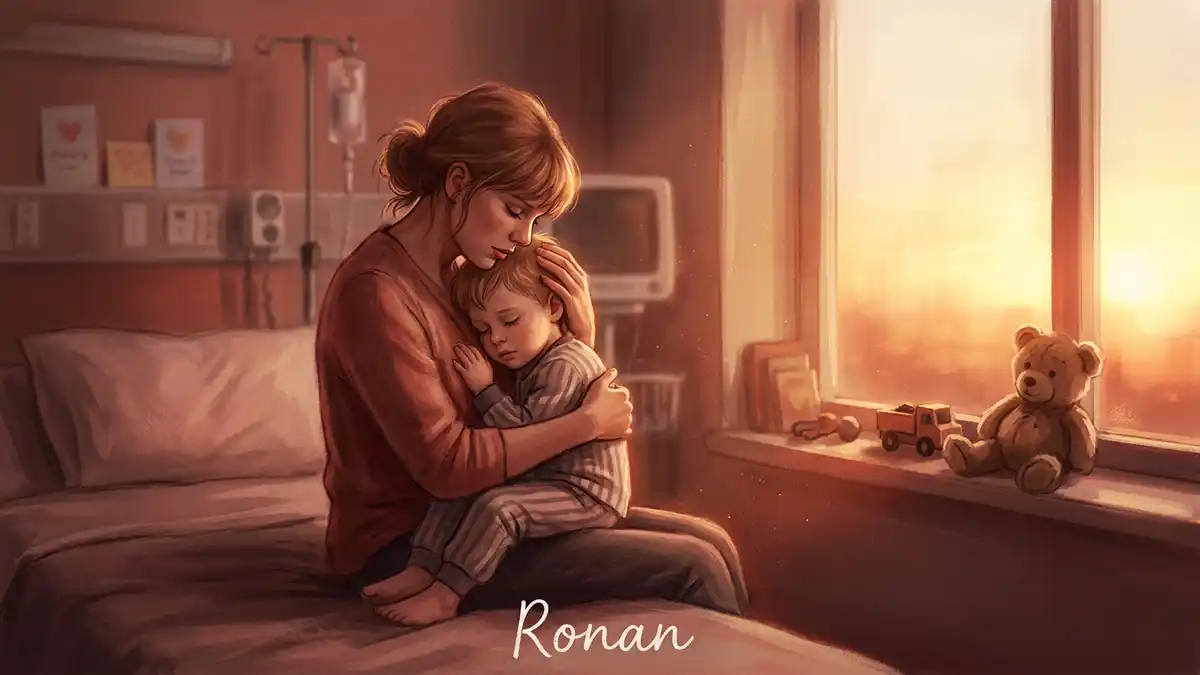

Ronan Taylor Swift Lyrics form one of the most heartbreaking entries in Taylor Swift’s discography—a stripped, autumn-heavy elegy born from real loss, written with the courage to hold grief in plain language. The song honors four-year-old Ronan Thompson, who died from neuroblastoma, and channels a mother’s love into melody without cheapening it.
About Ronan
“Ronan” began as a response to the writing of Maya Thompson, Ronan’s mother, who documented her son’s illness and memory in the blog “Rockstar Ronan.” Swift shaped those words—sometimes directly—into a song that refuses spectacle. Released as a charity single in connection with cancer awareness efforts, the track stands apart from the high-gloss romance narratives that dominated much of Swift’s mainstream profile in the early 2010s. It is quiet where other songs might swell; careful where others might dramatize.
Swift performed “Ronan” live at the 2012 Stand Up to Cancer telethon, a setting that underscored the song’s purpose: not chart dominance as the primary goal, but witness, fundraising, and communal mourning. Maya Thompson received a co-writing credit alongside Swift, a formal acknowledgment that the song’s emotional DNA belongs to a family’s real story. In the deep red register of Red-era aesthetics—where love songs can feel like bonfires—this track is different: it is candlelight, trembling hands, and the stubborn beauty of remembering a child’s smile.
Among Swift’s catalog, “Ronan” is frequently cited as one of her most difficult listens, not because it is musically abrasive, but because its sorrow is anchored in an actual life. Fans approach it with reverence; critics note its restraint. The song does not try to “solve” death or offer a tidy inspirational bow. It tries to say: this person was here, this love remains, and some seasons never feel like they turn.
Contextually, the song also belongs to a wider tradition of music written in response to illness and loss—works that must weigh public attention against private pain. Swift’s choice to channel Maya Thompson’s voice through song helped direct eyes toward fundraising and research conversations at a moment when social media was beginning to reshape how families shared grief. Even years later, listeners describe the track as something to approach gently: not background music, but a deliberate act of listening, like stepping into a quiet chapel while the world outside still rushes on in scarlet and gold.
Ronan Lyrics
Because this song intertwines with a family’s lived language, publish lyrics only from an authorized source. The placeholder marks where the full text should appear in your WordPress post template.
[Verse 1]
I remember your bare feet down the hallway
I remember your little laugh
Race cars on the kitchen floor, plastic dinosaurs
I love you to the moon and back
I remember your blue eyes lookin’ into mine
Like we had our own secret club
I remember you dancin’ before bedtime
Then jumpin’ on me, wakin’ me up
I can still feel you hold my hand, little man
And even the moment I knew
You fought it hard like an army guy
Remember I leaned in and whispered to you
[Chorus]
Come on, baby, with me
We’re gonna fly away from here
You were my best four years
[Verse 2]
I remember the drive home, when the blind hope
Turned to cryin’ and screamin’, “Why?”
Flowers pile up in the worst way, no one knows what to say
About a beautiful boy who died
And it’s about to be Halloween
You could be anything you wanted if you were still here
I remember the last day, when I kissed your face
And whispered in your ear
[Chorus]
Come on, baby, with me
We’re gonna fly away from here
Out of this curtained room
And this hospital gray, we’ll just disappear
Come on, baby, with me
We’re gonna fly away from here
You were my best four years
[Bridge]
What if I’m standin’ in your closet tryin’ to talk to you?
And what if I kept the hand-me-downs you won’t grow into?
And what if I really thought some miracle would see us through?
What if the miracle was even gettin’ one moment with you?
[Outro]
Come on, baby, with me
We’re gonna fly away from here
Come on, baby, with me
We’re gonna fly away from here
You were my best four years
I remember your bare feet down the hallway
I love you to the moon and back
Meaning and Analysis
Lyrically, “Ronan” succeeds through intimate second-person address and memory fragments: everyday details that make absence unbearable precisely because they are ordinary. Swift’s delivery, in many listeners’ memories, stays soft—almost afraid to disturb the song’s sacred space. The writing avoids turning a child into metaphor; instead it keeps returning to specificity, the way grief does when your mind loops the same beloved images, hoping somehow the loop will end differently.
Thematically, the song sits outside competitive readings of Swift’s love life. It invites a different kind of analysis—one about ethical storytelling, consent in art, and how celebrity platforms can amplify charitable causes. The co-writing credit with Maya Thompson matters artistically and morally: it signals collaboration rather than extraction, and it anchors the track in ongoing family truth rather than fleeting publicity.
In the broader “aesthetic” language the Red era evokes—crimson leaves, cooling air, the sense that emotions can be vivid as flame—“Ronan” is the track that reminds you some reds are not romance; they are alarms, heartbeats, and the stubborn color of love under impossible pressure. For readers seeking a factual overview of neuroblastoma, the Wikipedia article on neuroblastoma provides a general medical summary from an encyclopedic source.
From a lyrical-analysis standpoint, the song’s power is inseparable from its ethical frame: it asks audiences to hold space for a real child and a real family rather than treating tragedy as narrative spice. That distinction matters when discussing “meaning,” because the goal is not clever interpretation for its own sake but respectful engagement—recognizing art as a vessel for love that outlasts a single telecast, a single news cycle, or a single streaming session on a cold autumn night.
FAQs
Who is “Ronan” about?
The song honors Ronan Thompson, a young boy who died of neuroblastoma, inspired by his mother Maya Thompson’s writing.
Did Taylor Swift perform “Ronan” live?
Yes—she performed it on the Stand Up to Cancer telethon in 2012.
Who shares writing credit on the song?
Maya Thompson is credited as a co-writer alongside Taylor Swift.
Is “Ronan” a typical Red album track?
It is often discussed as a bonus/charity release tied to the Red era rather than a core promotional single.