
Those seeking The Manuscript Taylor Swift lyrics are reaching for the closing pages of a double album—where pain is reread, reframed, and finally filed away with steadier hands. This guide explains how The Manuscript concludes The Tortured Poets Department, its Anthology placement, and why it feels like an artistic exhale. Read more about Taylor Swift and her discography on our site.
Table of Contents
About The Manuscript
The Manuscript is Anthology track 31—the closing track of the entire thirty-one-song edition of The Tortured Poets Department. Released April 19, 2024, the album arrived as a deliberate two-part statement: sixteen songs under the primary title, followed by fifteen bonus tracks branded as The Anthology. As the final entry, The Manuscript carries the responsibility of last words, and Swift treats it like an epilogue written in quieter ink.
The song is produced by Aaron Dessner alongside Swift, fitting the reflective mode that Dessner often helps her access—spacious arrangements, careful piano figures, and vocals that sound like someone thinking aloud in a lit room late at night. While much of the album was shaped by Swift with Jack Antonoff as well, ending on a Dessner-led piece reinforces the folk-indie through-line that has defined major chapters of her recent work.
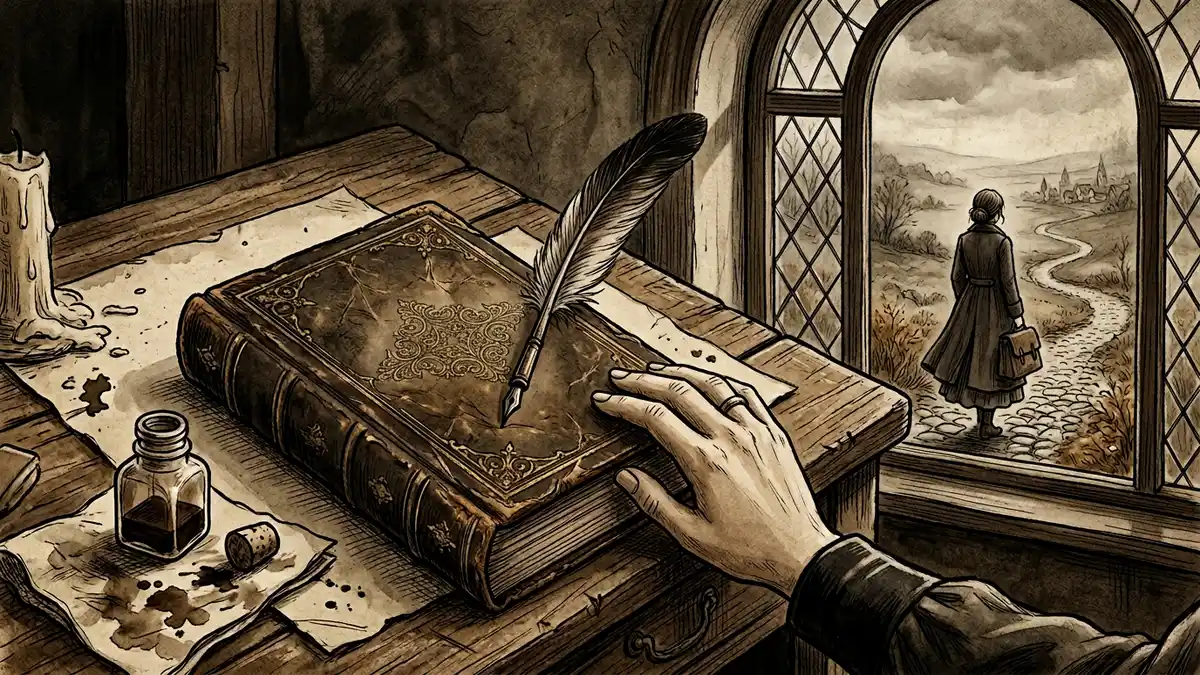
Lyrically, The Manuscript is about revisiting old pain through art and recognizing how far you have traveled. The metaphor of a manuscript suggests drafts, revisions, and the writerly habit of turning experience into narrative—then realizing the narrative no longer owns you. It is a full-circle gesture for a record marketed as a “department” of poets: the meeting adjourns, the file closes, the story is allowed to age.
As an Anthology bonus track, the song also underscores Swift’s 2024 release strategy: the “surprise” second half was not filler but a completed second act. Choosing The Manuscript as the finale implies that the true resolution lives beyond the marquee heartbreak tracks— in the work of integration, perspective, and letting the past become material rather than emergency.
The Manuscript Lyrics
Now and then she re-reads the manuscript
Of the entire torrid affair
They compared their licenses, he said: I’m not a donor, but
I’d give you my heart if you needed it
She rolled her eyes and said: You’re a professional
He said: No, just a good samaritan
He said that if the sex was half as good as the conversation was
Soon they’d be pushin’ strollers
But soon it was over
In the age of him, she wished she was thirty
And made coffee every morning in a French press
Afterwards, she only ate kids’ cereal
And couldn’t sleep unless it was in her mother’s bed
Then she dated boys who were her own age
With dartboards on the backs of their doors
She thought about how he said since she was so wise beyond her years
Everything had been above board
She wasn’t sure
And the years passed like scenes of a show
The professor said to write what you know
Lookin’ backwards, might be the only way to move forward
Then the actors were hitting their marks
And the slow dance was alight with the sparks
And the tears fell in synchronicity with the score
And at last, she knew what the agony had been for
The only thing that’s left is the manuscript
One last souvenir from my trip to your shores
Now and then I re-read the manuscript
But the story isn’t mine anymore
Meaning and Analysis
The Manuscript dramatizes the difference between reliving and reviewing. A manuscript is not only a story; it is evidence of editing—cross-outs, margin notes, versions that no longer reflect who you are. Swift’s narrator seems to confront younger choices and older wounds with a calmer lens, not because the pain was unreal but because survival changes the acoustics of memory.
This makes the song a meta-commentary on Swift’s own artistic method without breaking the fourth wall too loudly. She has often described songwriting as a way to process; here, processing becomes subject matter. Dessner’s understated production refuses melodrama, suggesting maturity as quiet steadiness rather than a triumphant belt. The listener is invited to sit with ambiguity: closure does not always sound like a shout—sometimes it sounds like turning a page and discovering your hands are steadier than they used to be.
In the context of the full double album, The Manuscript answers the volatility of earlier tracks—prophecies, bolting, mythic battles—with a grounded epilogue. It suggests that the tortured poets eventually clock out, that departments can close, and that art can be both a container for pain and proof that you have moved beyond its immediate weather. As the final Anthology song, it is an elegant hand on the door: exit through the library, not the fire.
Because The Tortured Poets Department debuted April 19, 2024, as a two-part statement—sixteen core songs plus fifteen Anthology bonus tracks—the finale carries extra weight: listeners understand they have completed a marathon, not a sprint. Aaron Dessner’s work with Swift here complements the album’s wider production identity, where Jack Antonoff frequently helps shape brighter, more propulsive tracks. Ending on Dessner’s reflective palette signals closure as quiet integration rather than flashy resolution.
FAQs
Is The Manuscript the last song on The Tortured Poets Department?
Yes. On the 31-track edition, The Manuscript is Anthology track 31 and serves as the closing song of the entire double album.
Who produced The Manuscript?
Aaron Dessner co-produced with Taylor Swift, giving the finale a reflective, intimate sound.
What is The Manuscript about?
The lyrics explore revisiting past pain through writing and art, then realizing you have emotionally moved beyond the chapter you once thought would define you forever.
Is The Manuscript part of The Anthology?
Yes. It is a bonus track from The Anthology (tracks 17–31), not one of the first sixteen main album songs.