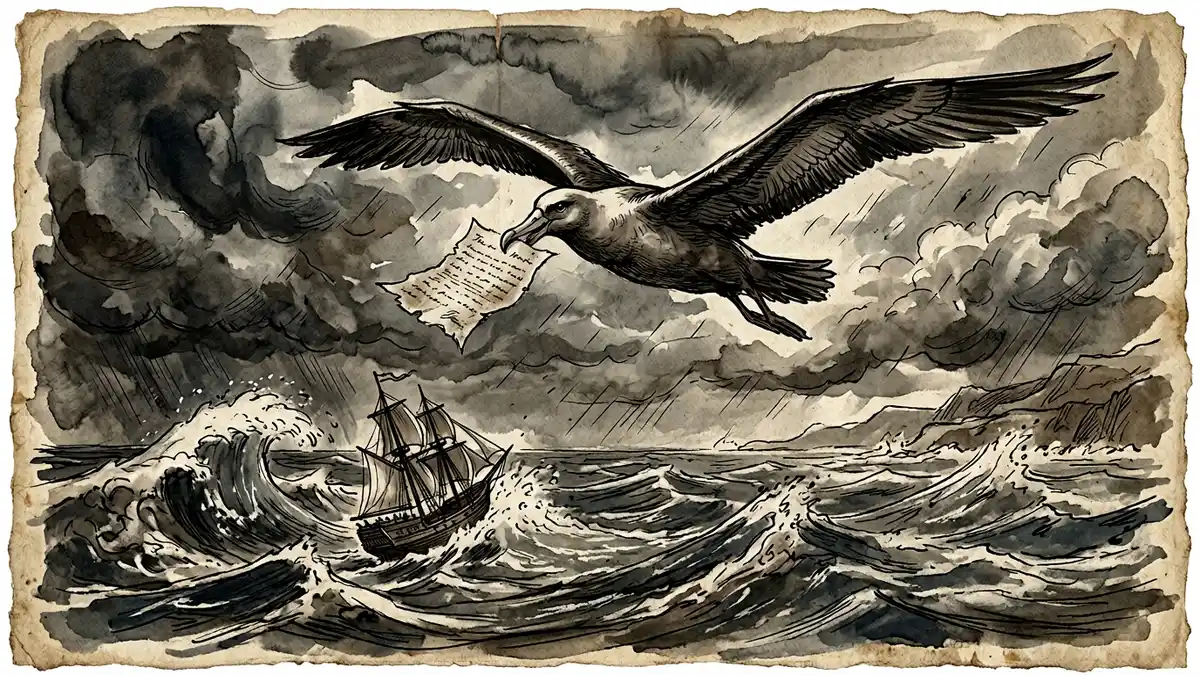

Readers searching for The Albatross Taylor Swift lyrics are unpacking one of The Anthology’s most literary heartbreak metaphors—track 19 on the expanded The Tortured Poets Department release from April 19, 2024. The albatross invokes Samuel Taylor Coleridge’s The Rime of the Ancient Mariner, where the bird shifts from blessing to burden—a symbol that sticks to the wearer long after the original crime. For Swift’s broader story, start at Taylor Swift.
Table of Contents
About The Albatross
The Albatross is track 19 on The Anthology, the fifteen bonus tracks Swift packaged with the standard sixteen-song edition of The Tortured Poets Department to create a thirty-one-song double album released April 19, 2024. While tracks 1–16 are often discussed as the album’s “front door,” tracks 17–31 deepen and complicate the same emotional house—adding rooms the listener did not know existed until midnight dropped them into the tracklist. As an Anthology song, The Albatross leans into Swift’s poet-brand: allusion, moral fog, and the sense that love stories can become curses when retold badly.
Co-produced with Aaron Dessner, the song fits the Dessner mode of slow-burn clarity—guitars and atmosphere that feel like fog rolling in, vocals forward enough to catch every word. That pairing matters because the lyric trades in a heavy symbol; if the production competed too hard, the metaphor might feel academic. Instead, the sound tends to keep the listener inside feeling: shame, suspicion, the suspicion that you have been turned into a story you did not authorize.
The albatross image, drawn from literary tradition, suggests a partner—or a public—who treats you as an ill omen: something to blame when winds shift, something to hang around a neck as proof of sin. Swift’s catalog repeatedly examines reputation as a costume forced onto women; here, the costume is mythic, almost gothic. The song asks what it costs to be loved only until you become inconvenient, and what it costs to be remembered as a warning tale rather than a person.
Within the Anthology sequence, track 19 arrives after the playful menace of imgonnagetyouback and before more character-driven explorations later in the bonus disc. That placement gives The Albatross a solemn, myth-sized pause—less about a single bar or text thread, more about archetype. It reminds listeners that Swift’s songwriting education includes not only diaristic detail but also the classroom of canonical poetry, where symbols outlive their first narrators.
The Albatross Lyrics
Wise men once said
Wild winds are death to the candle
A rose by any other name is a scandal
Cautions issued, he stood
Shooting the messengers
They tried to warn him about her
Cross your thoughtless heart
Only liquor anoints you
She’s the albatross
She is here to destroy you
Wise men once said
One bad seed kills the garden
One less temptress, one less dagger to sharpen
Locked me up in towers
But I’d visit in your dreams
And they tried to warn you about me
Cross your thoughtless heart
Only liquor anoints you
She’s the albatross
She is here to destroy you
Devils that you know
Raise worse hell than a stranger
She’s the death you chose
You’re in terrible danger
And when that sky rains fire on you
And you’re persona non grata
I’ll tell you how I’ve been there too
And that none of it matters
Wise men once read fake news
And they believed it
Jackals raised their hackles
You couldn’t conceive it
You were sleeping soundly when they dragged you from your bed
And I tried to warn you about them
So I crossed my thoughtless heart
Spread my wings like a parachute
I’m the albatross
I swept in at the rescue
The devil that you know
Looks now more like an angel
I’m the life you chose
And all this terrible danger (ah-ah-ah-ah)
This terrible danger (ah-ah-ah-ah)
So cross your thoughtless heart (ah-ah-ah-ah)
She’s the albatross (ah-ah-ah-ah)
She is here to destroy you
Meaning and Analysis
When fans look up The Albatross Taylor Swift lyrics, they are often connecting the song to Coleridge’s famous curse: the mariner destroys the albatross, then must carry its corpse as penance while the world around him punishes and isolates him. Translated into romance, the symbol becomes a brutal question—who gets to be innocent, and who gets cast as the bad omen when a relationship fails? Swift’s use of literary reference is not decoration; it is argument. It insists that love and blame share a long cultural memory, and that women artists especially know what it feels like to be turned into a symbol others point at.
Dessner’s production supports this reading with a haunted patience. Rather than chasing a pop climax, the song often feels like testimony—measured, weary, unwilling to beg for sympathy. That emotional posture matches the albatross conceit: burdens are not always loud; sometimes they are heavy silences you drag from room to room. Swift’s language can sharpen that weight with modern details, so the myth does not float away into homework assignment. The listener should feel the neck ache.
Inside The Tortured Poets Department as a whole, The Albatross reinforces the album title’s promise: poets may write love, but they also inherit symbols that outgrow them. The Anthology placement suggests Swift treating the expanded album as a space where she can risk the most literary songs without worrying about “single energy.” The result is a track that rewards close reading—and rewards re-listening once you remember how curses, in stories, tend to linger longer than kisses.
FAQs
What literary reference does “The Albatross” use?
The title and themes echo Samuel Taylor Coleridge’s The Rime of the Ancient Mariner, where an albatross becomes a burden carried as a curse.
Is “The Albatross” on the main 16-track album?
No—it is an Anthology track (track 19 of the 17–31 bonus section) released the same day as the standard edition.
Who produced “The Albatross”?
Aaron Dessner co-produced the song, aligning with its atmospheric, organic sound.
What is the song about in simple terms?
It explores feeling blamed or burdened in a relationship—being treated like a bad omen or a weight someone else wants to remove.